DIAGNOSTICS
Car Battery Keeps Dying? 7 Common Causes for CT Drivers
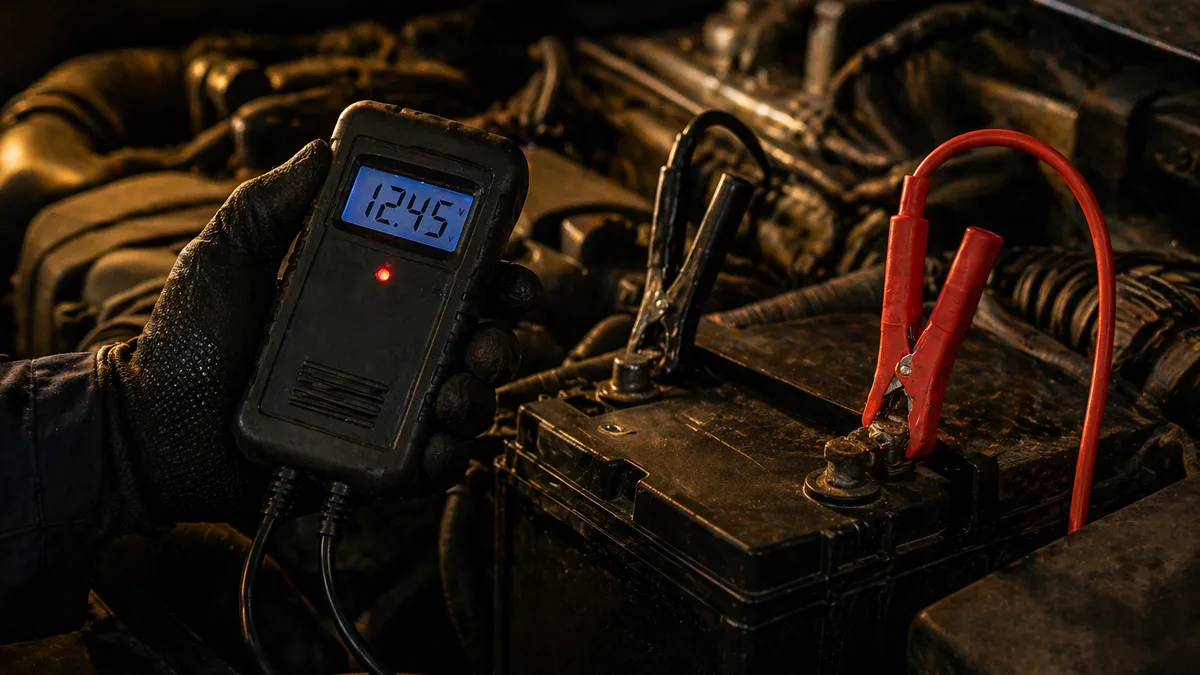
Connecticut winters are hard on car batteries. Below freezing, battery capacity can drop 30-60%. Below zero, it drops further. So the battery that was marginally OK in October shows up on a January morning as a click instead of a crank -- and you're standing in your driveway in Thomaston trying to figure out what to do.
At P&C Repair we replace a lot of batteries in January and February. But a dying battery isn't always the actual problem. Sometimes the battery is fine and something else is draining it. Here's how to tell the difference, the seven most common reasons a car battery keeps dying, and when it's really the battery versus when it's the system around it.
Why Cold Weather Kills Batteries
A car battery produces electricity through a chemical reaction between lead plates and sulfuric acid. That reaction slows down when it's cold. At 0°F, a battery has roughly 35-40% of its cranking power compared to 80°F. Meanwhile, the engine needs more amps to turn over in the cold because oil is thicker and internal friction is higher. So you're asking for more power from a battery that's delivering less. A battery that's three or four years old and borderline healthy can pass a test in October and fail completely on the first truly cold morning.
That's the overall frame. But even in warm weather, batteries die for specific reasons -- and if your battery keeps dying, one of these is usually why.
1. The Battery Is Just Old
In Connecticut's climate, most OEM batteries last 3-5 years. High-quality replacement batteries can go 5-7. If you're past year four and the battery's never been replaced, odds are strong it's reached end of life. Cold mornings just expose what was already happening.
Cold-cranking amps (CCA) decrease over time. A 5-year-old battery rated at 650 CCA new might test at 300-400 CCA -- enough to start the car when warm, not enough when cold. The fix is a new battery sized appropriately for your vehicle.
2. Parasitic Drain
Some draw on the battery after the car is shut off is normal -- radio presets, alarm, keyless entry module, clock. It should stay under 50 milliamps (0.05 amps). When something stays powered that shouldn't -- a stuck relay, a faulty module, a trunk light that never shuts off, an aftermarket amplifier wired wrong, a rodent-chewed wire -- the draw can climb to several hundred milliamps. That drains a healthy battery in a few days and kills an older one overnight.
Parasitic drain diagnosis requires a meter and patience. We isolate the draw by pulling fuses one at a time until the current drops. The fuse that kills the draw points to the circuit with the problem.
3. Failing Alternator
The alternator recharges the battery while the engine runs. When the alternator fails -- or charges at the wrong voltage -- the battery slowly drains even during normal driving. You start the car, drive around, park, and the battery's actually lower than when you started.
Symptoms of a failing alternator include dimming headlights at idle, a battery warning light on the dash, voltage below 13.5V with the engine running, and a whining or grinding noise from the alternator. If you just replaced the battery and the new one's already dying, the alternator is the first thing to check.
4. Short Trips That Never Fully Recharge the Battery
Starting the car uses a big burst of energy. The alternator needs several minutes of driving to replace what was pulled out. If your entire day is short trips -- three miles to the grocery store, two miles to daycare, four miles to work -- the battery never fully catches up. Over months it stays at a lower state of charge, sulfates, and loses capacity prematurely.
If most of your driving in the Thomaston, Plymouth, or Terryville area is short local trips, a battery tender or trickle charger plugged in overnight once a week can add years of life. Or take one longer drive each week -- 20+ minutes of steady driving.
5. Corroded or Loose Battery Terminals
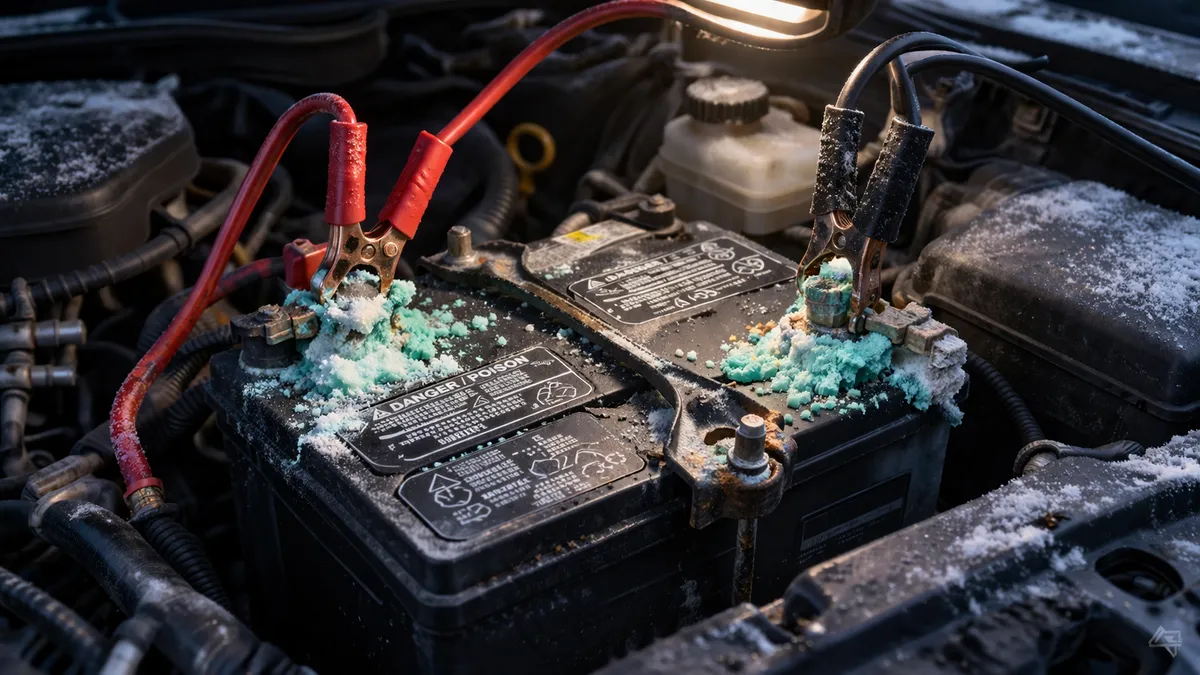
That white or bluish-green crusty buildup on the battery posts is corrosion -- and it's an insulator. Even a small amount restricts current flow in both directions: less charging from the alternator, less cranking power to the starter. The car acts like the battery's dying even when the battery itself is fine.
Cleaning is simple -- disconnect, wire-brush the posts and clamps, reconnect tightly, apply terminal grease. We do this as part of battery service. Loose terminals cause similar symptoms and can also damage electrical components if the connection cuts in and out.
6. Leaving Lights or Accessories On
Sounds obvious. Still happens. Dome light left on after unloading groceries, headlights left on (less common with auto-off), trunk light stuck on, a USB charger with a phone pulling current. A healthy battery will survive one overnight hit from a dome light. An older battery may not. If your battery dies once and bounces back fine after a jump and a drive, something accessory-related is usually the culprit.
7. Extreme Temperature Swings and Storage
A vehicle that sits for weeks without being driven -- a second car, a summer vehicle, or a car while you're traveling -- will lose charge just from normal parasitic draw. Cold accelerates it. If you come back to a car that's sat for three weeks in February, expect to jump-start it.
For vehicles that sit regularly, a battery disconnect switch or a trickle charger on a timer is the right answer.
How We Diagnose Battery Issues
When a customer comes in saying their battery keeps dying, we work through a standard sequence:
- Visual inspection -- battery age (most have a date code), terminal corrosion, case condition, cable tightness.
- Open-circuit voltage -- healthy is 12.6-12.8V at rest. Below 12.4V, the battery's partially discharged.
- Load test -- a digital tester pulls current and measures how well the battery sustains voltage. This tells us real capacity vs rated capacity.
- Charging system test -- voltage with the engine running should be 13.8-14.7V. Below that, the alternator isn't charging properly.
- Parasitic draw test (if the symptoms fit) -- isolating the current draw with the vehicle off.
That sequence usually identifies the real problem in under 30 minutes. We'd rather tell you the alternator's the issue than sell you a battery that's just going to die again.
When to Replace vs Just Recharge
If the battery tests below 75% of its rated capacity, replace it. If it tests above 75% but keeps dying, the problem is somewhere else in the system -- and replacing the battery alone will just push the issue a few weeks out.
Typical battery replacement at our shop runs $150-$300 depending on the vehicle and battery type. AGM batteries (required for many newer vehicles with start-stop systems) are at the higher end. Installation includes a proper charging system check and terminal cleaning.
Come See Us Before You're Stranded
If your battery is 4+ years old, or if it's been slow to crank on cold mornings, get it tested before it leaves you stuck in a parking lot. A battery test takes about 10 minutes. Call P&C Repair at (860) 601-0271 or stop by 64 N Main St in Thomaston. We serve drivers from Waterbury, Plymouth, Terryville, Bristol, Torrington, Harwinton, Watertown, and throughout Litchfield County. Better to know now than at 6 AM in February.
Need Help With This?
If something in this article sounds like what your vehicle is going through, bring it in. We'll diagnose the issue and give you a straight answer.
Keep Reading
More from The Garage

Car Won't Start in Cold Weather — Troubleshooting Guide
Car won't start on a cold Connecticut morning? Here are the most common causes and what you can do before calling a mechanic.
Car Won't Start and Makes a Clicking Noise? Here's Why
If your car clicks but won't start, the problem is usually electrical. Here's how to tell if it's the battery, starter, or something else -- and what to do next.
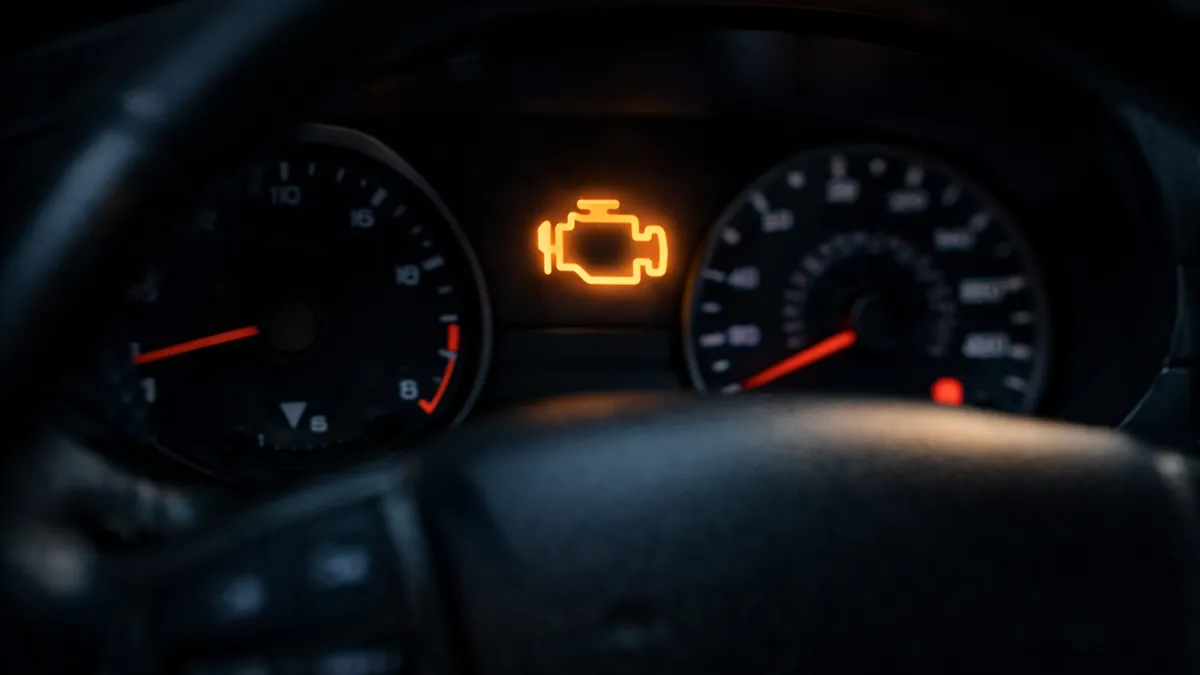
Check Engine Light On? Here's What It Could Mean
Your check engine light can mean anything from a loose gas cap to a serious engine problem. Here's how to tell the difference and what to do next.
Ready to Get Your Vehicle Fixed?
Schedule your appointment today. Free estimates on all repairs -- we'll explain what needs to be done before we do any work.