CT_DRIVING
Catalytic Converter Theft in Connecticut: Prevention, Signs, and What to Do Next
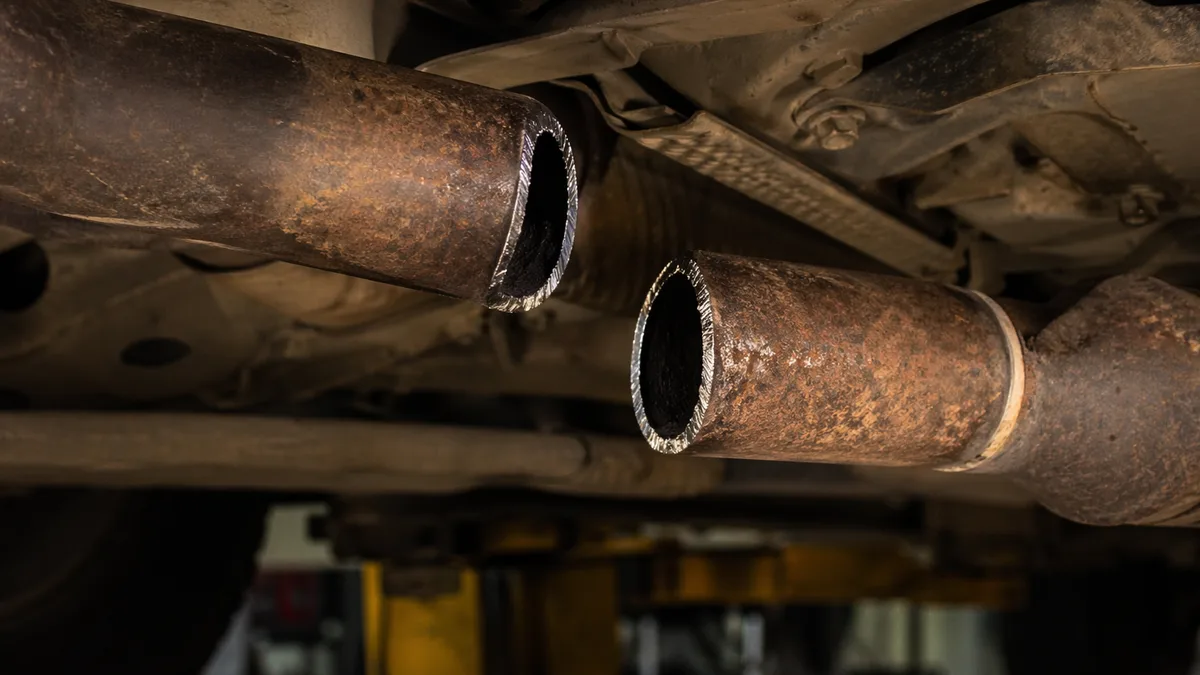
If you've ever walked out to your car, turned the key, and heard what sounds like a Harley-Davidson with no muffler, you already know the feeling -- and you probably know what happened. Your catalytic converter has been stolen. It's one of the most common vehicle-related crimes in Connecticut, and despite a 2022 state law that made it harder to sell stolen converters, the problem hasn't gone away.
At P&C Repair in Thomaston, we see this every year. A customer calls in a panic because their truck suddenly sounds like it's coming apart. They drive in, we put it on the lift, and there it is -- a clean cut in the exhaust pipe where the converter used to be. Here's what's actually going on with catalytic converter theft in Connecticut, how to tell if it happened to you, what to do next, and how to make your vehicle a harder target.
Why Thieves Target Catalytic Converters
Catalytic converters contain small amounts of platinum, palladium, and rhodium -- three precious metals that are often worth more per ounce than gold. Scrap value for a single converter can run anywhere from $50 to several hundred dollars depending on the vehicle and metal prices at the time. A thief with a portable reciprocating saw can cut one out in under two minutes.
Hybrids have especially valuable converters because the engine runs cooler (the electric motor does part of the work), which means less of the precious metal burns off over time. That's why Prius thefts are so common -- the converters are still loaded with platinum and palladium even at high mileage.
Which Vehicles Get Targeted Most
Not all vehicles are at equal risk. Thieves go after models that are easy to get under quickly and that have high-value converters. The most frequently targeted vehicles include:
- Ford F-150 -- the most stolen-from vehicle in the country. High ground clearance makes the converter easy to access.
- Toyota Prius (especially 2004-2009 models) -- hybrid converter with very high precious-metal content.
- Toyota Tacoma -- pickup clearance plus a valuable converter. Toyota redesigned the 2025+ Tacoma with the converter tucked inside the engine bay, which has made newer models much harder to target.
- Honda Element and CR-V -- popular, plentiful, and easy to access underneath.
- Other hybrids -- Camry Hybrid, Highlander Hybrid, Lexus RX Hybrid, Ford Escape Hybrid.
- Work trucks and box vans -- often parked in lots overnight, easy access, and large converters.
If you drive one of these in Connecticut, it doesn't mean you'll be hit -- but it does mean prevention is worth taking seriously.
Signs Your Catalytic Converter Was Stolen
Usually, you know the moment you turn the key:
- A sudden, extremely loud roar or rumble on startup. Without a converter, the exhaust flows directly from the engine to whatever's left of your pipe. It's deafeningly loud.
- Loss of engine power, especially on acceleration.
- Exhaust smell inside the cabin.
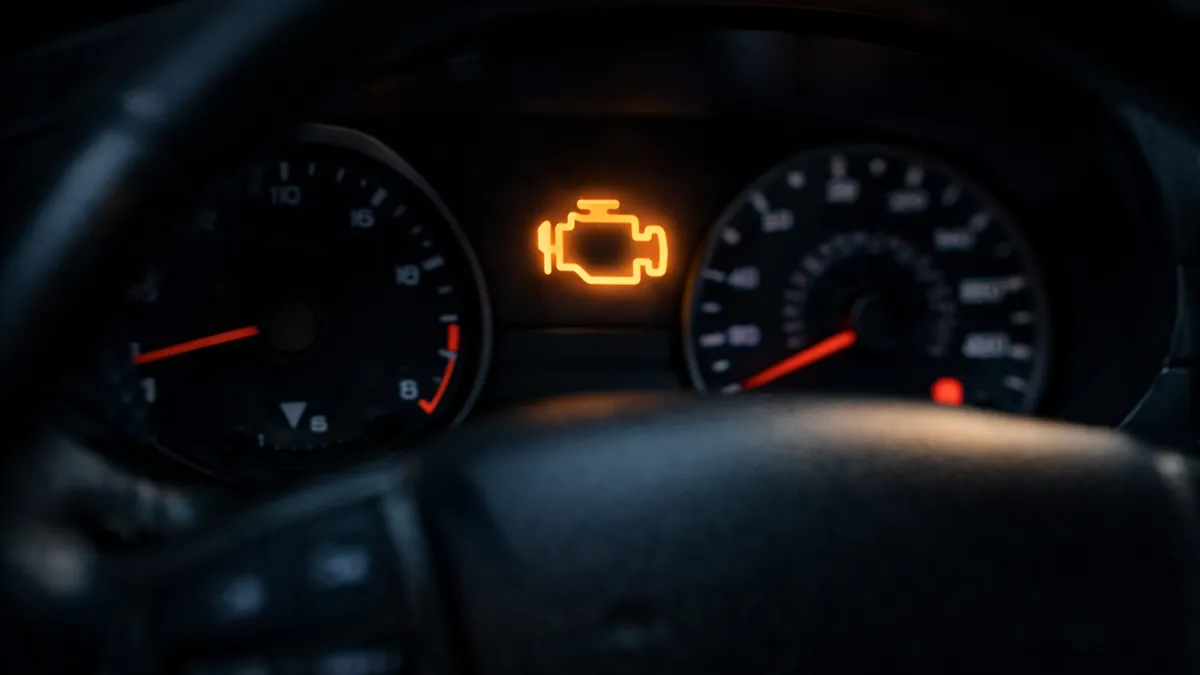
- Check engine light on -- the oxygen sensors downstream of the missing converter will immediately throw codes. (For more on what the CEL can mean, see our check engine light guide.)
- Sputtering or jerky acceleration as the engine struggles with the sudden change in exhaust flow.
If you're unsure, look underneath the vehicle. A stolen converter leaves behind obvious jagged cuts in the exhaust pipe where it used to be. There will be a gap -- usually between 8 and 18 inches long -- where the converter should be.
What to Do Immediately If It Was Stolen
Here's the order of operations:
- Don't drive the vehicle far. Without a converter, your engine isn't dangerous to operate short distances, but the noise will attract attention and extended driving with the downstream oxygen sensor disconnected can cause wider computer issues. Drive straight to a shop or call a tow.
- File a police report. This is required for any insurance claim, and it helps law enforcement track theft patterns in your area.
- Call your insurance company. Catalytic converter theft is covered under comprehensive coverage, not collision -- so if you carry comprehensive, you're typically covered minus your deductible. Ask specifically about converter-theft coverage; some insurers have started raising deductibles or limiting coverage for this specific loss.
- Get a written estimate. At P&C Repair we'll put your vehicle on the lift, confirm the damage, and write up a detailed estimate you can submit to insurance. In many cases the exhaust pipe on either side of the missing converter also needs repair or replacement because of the way thieves cut.
What Connecticut's 2022 Law Actually Did
Public Act 22-43, signed by Governor Lamont in May 2022 and effective July 1, 2022, went after the resale side of the problem. Key provisions:
- Scrap dealers must photograph or video the seller and their driver's license before buying a catalytic converter not attached to a vehicle.
- Sellers can only sell one converter per day to a scrap dealer.
- Payment must be by check mailed to the seller's home address -- no cash.
- Scrap dealers must record the license plate of the vehicle used to transport the converter, obtain a written statement of ownership, and affix a stock number.
- Weekly electronic reporting of all converter purchases to Connecticut State Police.
- Violations are a Class C misdemeanor.
The law has made it harder for thieves to cash out quickly through legitimate scrap yards, which is progress. But it hasn't eliminated the problem -- converters still move out-of-state and through unlicensed channels. Metal prices remain high, and organized theft rings haven't gone away.
How to Protect Your Vehicle
No prevention method is bulletproof, but layered defense works:
- Install a catalytic converter shield or cage. Steel plates, cables, or cages bolted around the converter make it much harder to cut out quickly. A thief looking at a shielded converter usually moves on to an easier target. Shields typically cost $200-$500 installed by a specialty shop.
- VIN-etch the converter. Having your vehicle's VIN engraved on the converter makes it harder for scrap dealers to accept and easier for police to trace. Some Connecticut police departments hold free etching events.
- Park in a garage when possible. If not, park in well-lit areas close to buildings.
- Use motion-activated lights on your driveway or parking area.
- Consider a tilt-sensitive car alarm that triggers when the vehicle is jacked up.
- Don't park the same vehicle in the same exposed spot every night. Thieves case areas; predictability helps them.
What Replacement Costs Look Like
This is the part most people find painful. Catalytic converter replacement is expensive because the part itself is expensive -- and the metals inside are part of what made someone want to steal it in the first place.
Typical replacement cost ranges (current pricing):
- Standard passenger car: $1,300-$2,500 for parts and labor.
- Pickup trucks and larger SUVs: $1,500-$3,500 -- often two converters instead of one.
- Hybrids and luxury vehicles: $3,000-$4,500 or more.
- Diesel vehicles: Can run higher because of more complex aftertreatment systems.
Aftermarket converters are cheaper than OEM, but they need to meet federal EPA emissions standards -- and in some cases Connecticut vehicles need a higher-grade emissions-compliant part to pass Connecticut emissions testing. Using the wrong part can cause a check engine light and an emissions failure. At P&C Repair we make sure the replacement is appropriate for your specific vehicle so it passes the next state test.
Insurance, Out-of-Pocket, and Whether to File
Comprehensive insurance typically covers catalytic converter theft minus your deductible. If your deductible is $500 and the replacement is $2,000, filing usually makes sense. If your deductible is $1,500 and the repair is $1,800, it may not be worth a claim -- especially if filing could affect your rates.
We give you a written estimate either way. You can use it to make an informed decision with your agent before filing.
If This Happened to You, We Can Help
If you think your catalytic converter was stolen -- or if your vehicle suddenly got much louder and nobody did anything to the exhaust -- bring it to P&C Repair. We'll put it on the lift, confirm what's going on, and give you a detailed written estimate. We use the correct emissions-compliant converter for your vehicle so it passes the next Connecticut emissions test.
Stop by P&C Repair at 64 N Main St in Thomaston, or call (860) 601-0271. We serve drivers from Waterbury, Plymouth, Terryville, Bristol, Torrington, Harwinton, Watertown, and throughout Litchfield County. Catalytic converter theft is stressful, but it's also routine -- we'll get you back on the road.
Need Help With This?
If something in this article sounds like what your vehicle is going through, bring it in. We'll diagnose the issue and give you a straight answer.
Keep Reading
More from The Garage
5 Common Reasons Cars Fail CT Emissions (and How to Fix Them)
Most emissions failures in Connecticut come down to these five problems. Here's what causes them, what they cost to fix, and how to prevent them.

White Smoke from Exhaust: What It Means and When to Worry
White smoke or steam from your tailpipe could be normal condensation or a sign of a serious engine problem. Here's how to tell the difference.
Check Engine Light On? Here's What It Could Mean
Your check engine light can mean anything from a loose gas cap to a serious engine problem. Here's how to tell the difference and what to do next.
Ready to Get Your Vehicle Fixed?
Schedule your appointment today. Free estimates on all repairs -- we'll explain what needs to be done before we do any work.