REPAIR_GUIDES
How Much Does Brake Repair Cost in Connecticut?
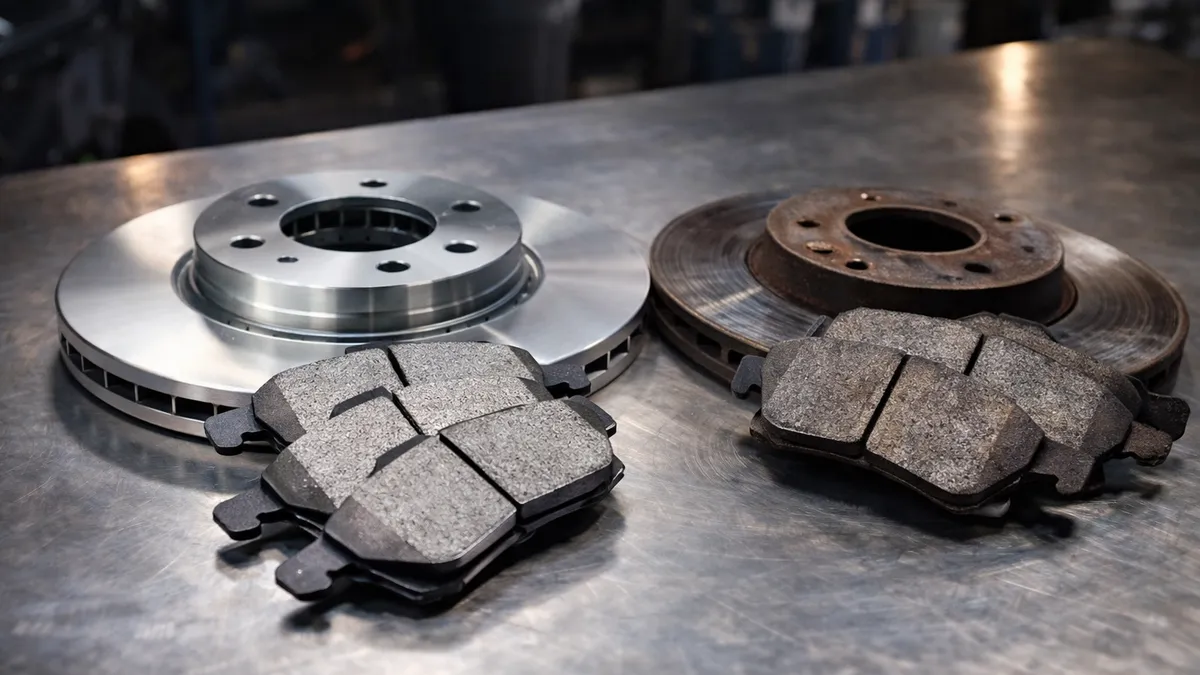
Most brake pad replacements cost $150-$300 per axle. If rotors need replacing too, expect $300-$600 per axle. A full brake system overhaul with calipers can run $500-$1,000+ per axle. Those are realistic ranges for Connecticut shops doing quality work with decent parts. If someone quotes you significantly less, ask what parts they're using and what's included.
At P&C Repair in Thomaston, we give free brake estimates with no obligation. Here's a detailed breakdown of what goes into brake repair pricing so you know exactly what you're paying for.
Brake Pad Replacement Cost
Brake pads are the most common brake repair. They're a wear item -- the friction material gradually wears down every time you stop. Most pads last 30,000 to 70,000 miles depending on the pad type, your driving habits, and your terrain.
A typical brake pad replacement includes:
- Removing the wheels and calipers
- Replacing the brake pads (both sides of the axle -- you always replace pads in pairs)
- Inspecting the rotors for wear, scoring, and thickness
- Lubricating caliper slide pins and hardware
- Reassembling and test driving
Expect to pay $150-$300 per axle for a pad replacement at a reputable independent shop in Connecticut. The range depends on your vehicle (compact car vs. full-size truck), the pad quality, and labor rates in your area. Front brakes typically cost slightly more than rear because front brakes do about 70% of the stopping work and use larger components.
Dealerships generally charge $200-$400+ per axle for the same work, because their labor rates are higher and they use OEM parts exclusively. An independent shop like P&C Repair can often install OEM-equivalent or better parts at a lower total cost.
Brake Rotor Cost
Rotors are the flat metal discs that the brake pads clamp down on. Over time, rotors wear thin, develop grooves, or warp from heat. When that happens, they need to be replaced.
Replacing rotors costs $100-$200 per rotor for parts, depending on your vehicle. Trucks and SUVs use larger, heavier rotors that cost more. When you factor in pads plus new rotors, you're typically looking at $300-$600 per axle all in.
At P&C Repair, we always replace rotors rather than resurface them. New rotors give you better braking performance, a longer service life, and more peace of mind than a machined rotor with reduced material. It's the right way to do the job.
Caliper Replacement Cost
Brake calipers are the hydraulic clamps that squeeze the pads against the rotors. They're built to last a long time, but they don't last forever -- especially in Connecticut, where road salt corrodes the caliper slide pins, pistons, and bleeder screws.
You typically need caliper replacement when:
- A caliper is seized or sticking, causing uneven pad wear or the vehicle pulling to one side
- A caliper piston seal is leaking brake fluid
- The caliper bracket or mounting ears are damaged
A single caliper replacement costs $150-$400 per caliper including parts and labor, depending on the vehicle. If one caliper on an axle is failing, we generally recommend inspecting the other side carefully -- if it's showing similar corrosion or sticking, replacing both at the same time saves labor costs down the road.
A complete brake overhaul -- pads, rotors, and calipers on one axle -- runs $500-$1,000+ depending on the vehicle. This is less common. Most brake jobs are pads only or pads and rotors.
Brake Fluid Flush Cost
Brake fluid is hydraulic fluid that transfers force from your brake pedal to the calipers. Over time, brake fluid absorbs moisture from the air, which lowers its boiling point and can cause corrosion inside the brake lines and calipers. Most manufacturers recommend flushing the brake fluid every 2-3 years or 30,000 miles.
A brake fluid flush typically costs $80-$150. It's a relatively quick service -- we drain the old fluid, flush the system, and refill with fresh fluid. It's cheap insurance against internal corrosion and brake fade, especially if you drive in hilly terrain where your brakes work harder and generate more heat.
What Factors Affect Brake Repair Cost?
Two vehicles can need "brake pads" and have very different final bills. Here's what drives the price difference:
- Vehicle type: A Honda Civic uses smaller, cheaper brake components than a Ford F-250. Trucks and SUVs cost more across the board because the parts are larger and heavier. European vehicles (BMW, Audi, Mercedes) often cost more due to higher parts prices.
- OEM vs. aftermarket parts: OEM (original equipment manufacturer) parts match exactly what came on your vehicle from the factory. Aftermarket parts are made by third-party companies and range from budget to premium. Quality aftermarket parts like Centric, Wagner, or Raybestos often match or exceed OEM quality at a lower price. We use quality aftermarket parts that meet or exceed OEM specifications unless you specifically request factory parts.
- Front vs. rear brakes: Front brakes cost slightly more because they handle the majority of braking force. Front rotors are typically larger, and front pads wear faster.
- Ceramic vs. semi-metallic pads: Ceramic pads are quieter, produce less dust, and last longer. Semi-metallic pads are cheaper, handle heat well, and are better for heavy-duty use. Ceramic pads cost $10-$30 more per set but are worth it for most daily drivers.
- Additional work needed: If your caliper slide pins are seized (common after Connecticut winters), brake hardware is corroded, or brake lines are leaking, the repair scope -- and cost -- goes up.
CT Terrain and Salt: Why Your Brakes Wear Faster Here
Connecticut drivers -- especially those of us in Litchfield County -- go through brakes faster than the national average. There are two main reasons.
First, the terrain. Thomaston, Harwinton, Burlington, Morris, and most of the surrounding area are hilly. Driving down Route 8, Route 6, or any of the winding back roads means constant braking on descents. That extra brake use accelerates pad and rotor wear. If you're coming from Torrington down through Thomaston regularly, you're using your brakes significantly more than someone driving on flat land.
Second, road salt. Connecticut uses heavy salt applications from November through March. That salt gets into brake calipers, corrodes slide pins, and causes calipers to stick. A sticking caliper keeps the pad in partial contact with the rotor even when you're not braking, which wears the pad and rotor prematurely -- and unevenly. We see the worst caliper corrosion in spring, after a full winter of salt exposure.
How to Know If You're Getting a Fair Price
Brake repair is one of the most commonly quoted auto repairs, and prices vary widely. Here's how to protect yourself:
- Get a written estimate before authorizing work. Any reputable shop will inspect your brakes and provide a detailed written estimate listing parts, labor, and total cost. If a shop won't put it in writing, go somewhere else.
- Ask what's included. Does the quote include hardware, lubricant, and a test drive? Some shops quote low for pads only, then add charges for hardware kits, brake cleaner, and rotor replacement.
- Beware "too good to be true" prices. A $79 brake special sounds great until you find out it's economy pads only, no rotor inspection, and they'll call you with $400 in "additional findings" once your wheels are off. Quality brake parts and proper installation take time and cost a fair price.
- Check reviews and ratings. Look at Google reviews, BBB ratings, and ask people you trust for recommendations. A shop's reputation tells you more than their advertised prices.
- Ask about the parts. There's a real difference between a $15 no-name brake pad from an overseas vendor and a $40 name-brand pad engineered for your vehicle. Ask what brand of parts the shop uses.
Brake Repair at P&C Repair
At P&C Repair, here's what you get when you bring your vehicle in for brake repair:
- Free brake inspection and estimate. We pull the wheels, measure pad thickness and rotor condition, inspect calipers and hardware, and give you a written estimate with no obligation.
- Upfront pricing. The price we quote is the price you pay. No hidden fees, no surprise charges after the work is done.
- Quality parts. We use name-brand aftermarket parts that meet or exceed OEM specifications. We don't install the cheapest parts we can find.
- A+ BBB rating and 4.8 Google rating. Our reputation matters to us. We've earned it by doing honest work at fair prices.
If you're hearing noise, feeling vibration, or your brakes just don't feel right, bring it in for a free inspection. We'll tell you exactly what's going on and what it'll cost -- no pressure, no upsells. If your brakes are fine, we'll tell you that too.
We also offer full vehicle diagnostics if you're not sure whether the issue is brakes or something else.
P&C Repair is located at 64 N Main St in Thomaston, CT. Call us at (860) 601-0271 or stop by Monday through Friday 8AM-5PM, Saturday 8AM-1PM. We'll take care of it.
Need Help With This?
If something in this article sounds like what your vehicle is going through, bring it in. We'll diagnose the issue and give you a straight answer.
Keep Reading
More from The Garage
Car Making Grinding Noise When Braking — Causes and Fixes
Hearing a grinding sound when you hit the brakes? Here's what causes it, how serious it is, and what it costs to fix. Straight talk from a Thomaston CT mechanic.
Check Engine Light On? Here's What It Could Mean
Your check engine light can mean anything from a loose gas cap to a serious engine problem. Here's how to tell the difference and what to do next.
Ready to Get Your Vehicle Fixed?
Schedule your appointment today. Free estimates on all repairs -- we'll explain what needs to be done before we do any work.