MAINTENANCE_TIPS
Diesel Truck Maintenance Schedule: What Connecticut Owners Need to Know
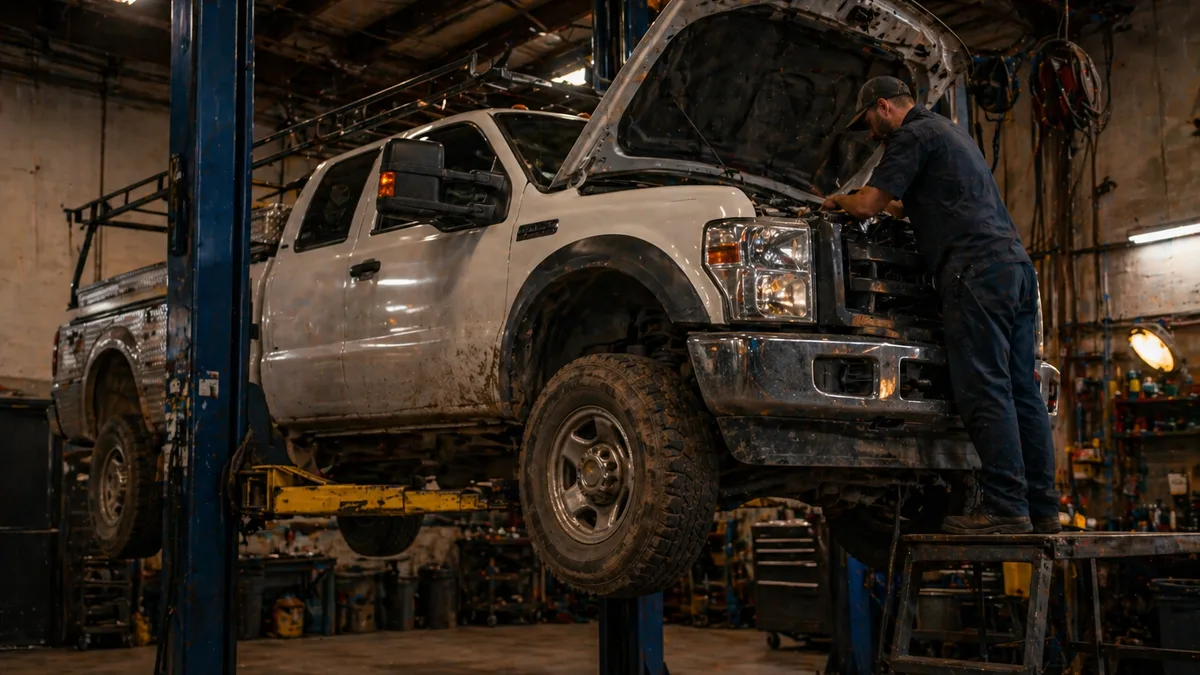
A well-maintained diesel pickup will go 400,000-500,000 miles without major engine work. That's the upside. The downside: a neglected diesel develops problems that are more expensive to fix than gas engine equivalents, and Connecticut's winters add another layer of challenge.
Here's the real maintenance schedule for diesel trucks operating in CT, the specific services that matter, and why P&C Repair is one of the Litchfield County shops that actually services diesel.
Why Diesels Are Different
Diesel engines ignite fuel through compression rather than spark. That means higher compression ratios (17:1 to 22:1 vs 10:1 for gas), different fuel delivery, heavier-duty internal components, and -- on modern diesels -- a complex emissions aftertreatment system that isn't found on gas vehicles. Each of these differences drives specific service needs that don't exist on a gas engine.
They also last longer. The heavier components are engineered for the higher compression, which means they tolerate heat and wear better than gas engine parts. With the right maintenance, diesel trucks genuinely do outlast gas trucks by 100,000-200,000 miles.
The Diesel Maintenance Schedule That Actually Matters
Oil Changes: 5,000-10,000 Miles
Use the exact oil specification in your owner's manual -- typically CK-4 or FA-4 for modern diesels. Diesel oil has higher detergent levels to deal with soot and higher TBN (total base number) to neutralize acidic combustion byproducts. Using the wrong oil can cause DPF clogging, emissions system damage, and in the worst cases, void certain portions of warranty coverage.
Oil capacity is much larger than gas engines -- typically 10-15 quarts instead of 5-6. Budget accordingly.
Fuel Filter: 15,000-30,000 Miles
This is critical on diesels. Common-rail fuel injection systems operate at 25,000-30,000 psi, and the injectors have extremely tight tolerances. Contaminated fuel can destroy injectors quickly -- replacing a set of diesel injectors can run $3,000-$6,000. A $60-$100 fuel filter replacement every 15,000-30,000 miles is cheap insurance.
Many modern diesels have two fuel filters (a primary water separator and a secondary fine filter). Both need service.
DEF Fluid: Top Off Constantly
DEF (Diesel Exhaust Fluid) is consumed during operation at about 1 gallon per 300-500 miles driven. Top it off every time you fill fuel. Running low triggers engine power reductions; running empty prevents the truck from starting. DEF is available at any truck stop and many regular gas stations.
DPF (Diesel Particulate Filter) Regeneration Awareness
The DPF traps soot from the exhaust and periodically burns it off through "regeneration" -- either passively during sustained highway driving, or actively by injecting extra fuel to raise exhaust temperatures. If most of your driving is short trips around Thomaston, Waterbury, or Plymouth, regeneration can fail to complete, and soot builds up until the DPF clogs.
Signs of DPF issues:
- DPF warning light
- Reduced power
- Increased fuel consumption
- Strong diesel smell
- Check engine light with DPF-related codes
The fix ranges from a forced regeneration cycle ($150-$300) to DPF cleaning ($400-$800) to DPF replacement ($2,500-$5,000+). Avoiding the worst outcome means taking the truck on a 30+ minute highway run at least once a week.
Glow Plugs: Replace Every 80,000-100,000 Miles
Glow plugs heat the combustion chamber for cold starts. A weak or failing glow plug doesn't cause total failure -- it just makes cold starts longer and rougher. In Connecticut winters below 20°F, weak glow plugs are a common cause of no-start complaints.
Transmission Service: 60,000-100,000 Miles
Diesel trucks often work harder than gas equivalents -- towing, hauling, plowing. Transmission fluid breaks down faster under heat. Fluid and filter service at 60,000-100,000 miles extends transmission life substantially.
Differentials and Transfer Case: 50,000-75,000 Miles
Gear oil in differentials and the transfer case wears out. For 4WD trucks used for plowing or heavy towing, shorter intervals are better.
Connecticut-Specific Challenges
Cold Starts
Diesel trucks struggle more than gas vehicles in cold weather. Below 20°F, the combination of thick oil, cold cylinders, and diesel fuel that's more prone to gelling can make starting difficult. Our guide on cold-weather starting issues applies to diesels with a few additions: glow plug health matters, fuel type matters (use winter blend), and a block heater used on sub-zero nights essentially eliminates cold-start problems.
DPF Regeneration in Short-Trip Driving
Connecticut winters plus a commute of 10 miles each way plus local errands can prevent DPF regeneration from completing. The fix is simple: take one longer drive per week -- 30-45 minutes at highway speeds on I-84 or Route 8. That lets the DPF burn off accumulated soot properly.
Road Salt and Undercarriages
Diesel trucks sit high and carry heavy aftertreatment equipment that's exposed to salt spray. DEF tanks, DPF housings, exhaust components -- all vulnerable. Undercoating and regular undercarriage washing matter even more than on a gas truck. See our undercoating guide for details.
Fuel Gelling
Below about 15°F, untreated diesel fuel starts gelling -- waxes in the fuel precipitate out and can plug fuel filters, preventing the engine from running. Winter-blend diesel (available at most CT fuel stations from November through March) is treated to resist gelling down to well below zero. If you fill up in November or later, it's almost always winter blend automatically.
Why Most Shops Don't Work on Diesel
Diesel service requires specific training, diagnostic tools that communicate with engine management systems that gas technicians don't use, and sometimes dedicated equipment (like forced DPF regen tools). The investment isn't worth it for shops that only see a handful of diesels per year. That's why most general repair shops either won't take diesel work or will only do basic services like oil changes.
P&C Repair has serviced diesel engines since the shop opened, including larger trucks. Shaun built the business partly on diesel work from local contractors, landscapers, farmers, and anyone else whose livelihood depends on a truck that has to run. We have the training, the tools, and the experience.
Diesel Service at P&C Repair
We handle:
- Diesel oil changes with proper oil
- Fuel filter service
- DEF top-off and diagnostics
- DPF cleaning and forced regeneration
- Glow plug replacement
- Cold-start diagnostics
- Turbocharger service
- Emissions system repair
- General diesel engine diagnostics and repair
- Preventive maintenance on daily drivers and work trucks
We do not do gas-to-diesel conversions or work on boat or equipment diesels (stationary engines, marine, tractor). For diesel trucks and cars, we're your shop.
Bring your diesel to P&C Repair at 64 N Main St in Thomaston, or call (860) 601-0271. We serve contractors, landscapers, plow operators, farmers, and everyday diesel owners from Thomaston, Waterbury, Plymouth, Terryville, Bristol, Torrington, Harwinton, Watertown, and throughout Litchfield County. If your truck has to run, we'll keep it running.
Need Help With This?
If something in this article sounds like what your vehicle is going through, bring it in. We'll diagnose the issue and give you a straight answer.
Keep Reading
More from The Garage

Car Won't Start in Cold Weather — Troubleshooting Guide
Car won't start on a cold Connecticut morning? Here are the most common causes and what you can do before calling a mechanic.
Winter Car Maintenance Checklist for Connecticut Drivers
Connecticut winters are tough on cars. Here's what to check before the cold hits — from tires and batteries to oil and coolant. A seasonal checklist from a Thomaston mechanic.
Check Engine Light On? Here's What It Could Mean
Your check engine light can mean anything from a loose gas cap to a serious engine problem. Here's how to tell the difference and what to do next.
Ready to Get Your Vehicle Fixed?
Schedule your appointment today. Free estimates on all repairs -- we'll explain what needs to be done before we do any work.