CT_DRIVING
Winter Car Maintenance Checklist for Connecticut Drivers
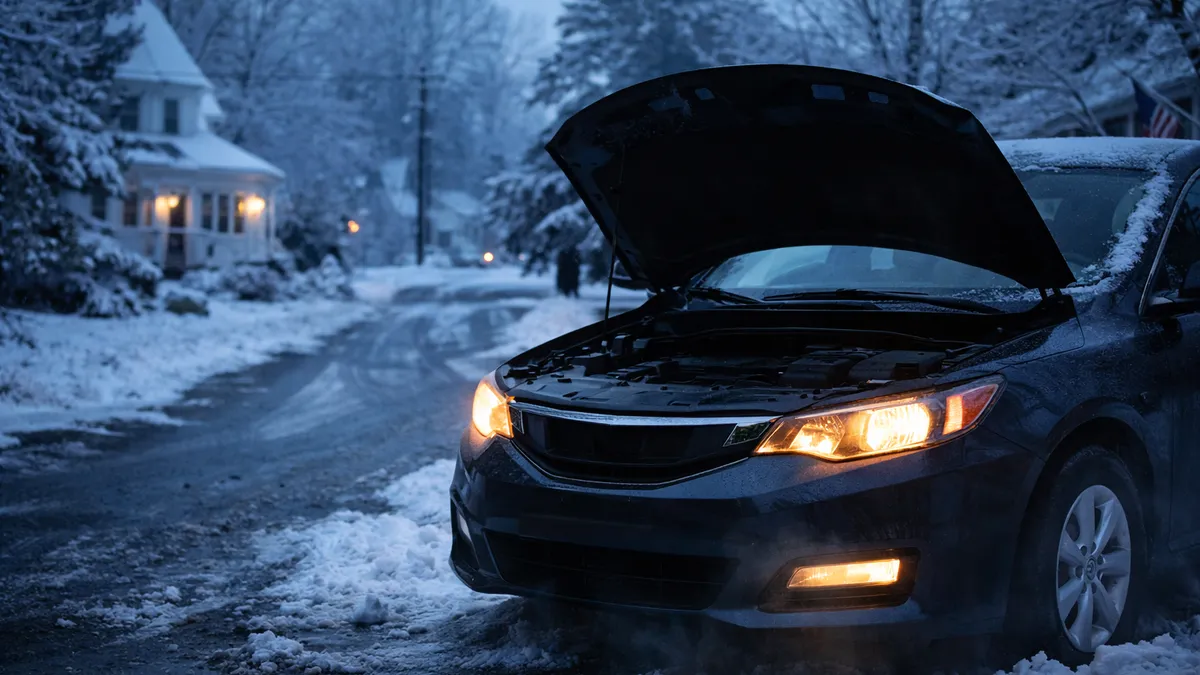
If you've lived through even one Connecticut winter, you know what your car is up against. Freezing temperatures that hang around for months. Road salt by the ton on every highway and side street. Ice storms that coat everything in a quarter inch of glaze. And once the thaw starts, potholes from frost heave that can swallow a wheel. It's a brutal combination, and it takes a real toll on vehicles that aren't prepared.
At P&C Repair in Thomaston, we start seeing the consequences every November -- dead batteries, bald tires on icy hills, and corroded brake components that should have been caught before the first snowfall. Most of these problems are preventable with a little preparation. Here's our winter checklist for Connecticut drivers -- the same things we check when customers bring their vehicles in for a pre-winter inspection.
Tires
Your tires are the only thing connecting your vehicle to the road, and in winter conditions, that connection matters more than anything else. Start by checking your tread depth. The legal minimum in Connecticut is 2/32 of an inch, but for winter driving, you want at least 5/32. Worn tread on wet or icy roads dramatically increases stopping distance.
If you live in Litchfield County or regularly drive the hilly roads around Thomaston, Harwinton, and Burlington, consider a set of dedicated snow tires. All-season tires are a compromise -- they're adequate in light snow, but they can't match the grip of a true winter tire when you're climbing a steep grade on Route 4 with packed snow on the road. Snow tires use a softer rubber compound that stays flexible in cold temperatures and a tread pattern designed to channel slush and bite into ice.
Also check your tire pressure. For every 10-degree Fahrenheit drop in temperature, your tires lose about 1 PSI. A tire that was properly inflated in September could be 5-7 PSI low by December. Low tire pressure reduces grip, increases wear, and hurts fuel economy. Check your pressure with a gauge -- don't rely on the tire pressure monitoring system to catch it until it's significantly low. Visit our tire and alignment service page to learn more about what we offer.
Battery
A car battery that starts fine in July can leave you stranded in January. Cold temperatures reduce a battery's available cranking power -- at 0°F, a fully charged battery only delivers about 50% of its rated capacity. At the same time, your engine's oil is thicker and harder to turn over, so it demands more power from the battery. It's a double hit.
If your battery is more than 3-4 years old, get it tested before winter. We test batteries with a conductance tester that measures the battery's actual cold cranking amps (CCA) against its rating. A battery might show 12.4 volts on a voltmeter and still fail a load test because its internal plates are degraded. Don't wait until you're stuck in a parking lot on a 5-degree morning to find out.
Also check the battery terminals for corrosion -- that white or greenish crust that builds up on the posts. Corroded connections reduce the current flow to your starter and can mimic a dead battery. Clean the terminals and apply dielectric grease to prevent further corrosion.
Oil
Your engine oil needs to flow freely to protect internal components during cold starts. When you turn the key on a frigid morning, it takes a few seconds for oil to circulate through the engine -- those first seconds are when the most wear occurs. Thicker oil takes longer to flow, which means more metal-on-metal contact.
Check your owner's manual for the recommended winter viscosity. Many vehicles use a multi-grade oil like 5W-30, where the "5W" rating indicates cold-weather flow characteristics. Some manufacturers recommend switching to 0W-20 or 0W-30 for winter. If you're still running conventional oil, consider switching to synthetic. Synthetic oil flows significantly better at low temperatures and provides superior protection during cold starts. We can help you choose the right oil for your vehicle and driving conditions -- stop by for an oil change before the cold settles in.
Coolant / Antifreeze
Your engine's cooling system does double duty in winter -- it prevents the engine from overheating and prevents the coolant from freezing. The standard 50/50 mix of antifreeze and water protects down to about -34°F, which is more than adequate for Connecticut winters. But if the mixture is off -- too much water and not enough antifreeze -- it can freeze and crack your engine block or radiator. That's a catastrophic failure.
Check the coolant level in the overflow reservoir (never open the radiator cap on a hot engine). If it's low, top it off with pre-mixed 50/50 coolant. If the coolant looks rusty, murky, or has floating debris, it's due for a flush and replacement. Old coolant also loses its corrosion inhibitors, which can lead to internal damage to your radiator, heater core, and water pump.
Brakes
Connecticut dumps thousands of tons of road salt on highways and local roads every winter. Route 8, I-84, and every state road in Litchfield County get treated regularly. That salt is effective at melting ice, but it's devastating to brake components. Salt accelerates corrosion on brake calipers, caliper slides, brake lines, and rotors.
Corroded caliper slides cause uneven pad wear and reduced braking performance. Rusty brake lines are a safety hazard -- if a line rusts through, you lose braking on that circuit. Before winter, have your brakes inspected. We check pad thickness, rotor condition, caliper operation, and brake line integrity. If you're hearing squealing, grinding, or feeling a pulsation in the pedal, don't wait -- get it checked now. Visit our brake repair page for details on what we inspect and service.
Wipers and Washer Fluid
Standard windshield wipers get stiff and ineffective in freezing weather. Winter wiper blades have a rubber boot that covers the frame and prevents ice from jamming the pivot points. If you haven't replaced your wipers in a year, do it before the first freeze. You'll be glad you did the first time you're driving through slush spray on Route 8 at 5 PM.
Switch to a winter-rated washer fluid that's good to at least -20°F. Never use plain water -- it will freeze in the lines and reservoir, potentially cracking the reservoir or pump. Keep an extra jug in the trunk. You'll burn through washer fluid fast when every truck on the highway is kicking up a salty mist.
Exhaust System
Road salt doesn't just attack your brakes -- it eats away at your exhaust system from the outside. Exhaust pipes, mufflers, flanges, and hangers are all vulnerable to corrosion. In Connecticut, it's extremely common to see exhaust components rust through well before the rest of the vehicle shows its age.
Listen for any new rattles, hissing, or rumbling noises from underneath the vehicle. A small exhaust leak can turn into a big one quickly once corrosion gets a foothold. Beyond the noise, exhaust leaks can allow carbon monoxide into the cabin -- a serious safety hazard, especially when driving with windows up and heat on. A compromised exhaust system will also cause you to fail your CT emissions test.
Emergency Kit
Even a well-maintained vehicle can get stuck or break down in winter conditions. Keep an emergency kit in your trunk with the essentials:
- Warm blanket or sleeping bag -- If you're stranded waiting for a tow, your car's heater won't run forever
- Flashlight with fresh batteries -- Winter breakdowns often happen in the dark
- Jumper cables or a portable jump starter -- A dead battery is the most common winter roadside issue
- Ice scraper and snow brush -- Keep one in the car, not just in the garage
- Cat litter or sand -- Sprinkle it under your drive wheels for traction if you're stuck on ice
- Phone charger -- A portable battery pack ensures you can call for help
- Small shovel -- For digging out after a plow buries you in
If you regularly drive the more rural stretches of Litchfield County -- Route 4 toward Goshen, Route 63 through Litchfield, or the back roads between Thomaston and Morris -- a breakdown in a winter storm can mean a long wait for help. Be prepared.
Schedule Your Winter Inspection
The best time to prepare your car for winter is before winter arrives. At P&C Repair, we offer a comprehensive pre-winter inspection that covers everything on this list -- tires, battery, oil, coolant, brakes, wipers, exhaust, and more. We'll tell you what needs attention now and what can wait, with honest recommendations and upfront pricing.
Stop by 64 N Main St in Thomaston, or call us at (860) 601-0271 to schedule your winter inspection. Don't wait until you're stuck on the side of Route 8 in a snowstorm to find out something needed fixing.
Need Help With This?
If something in this article sounds like what your vehicle is going through, bring it in. We'll diagnose the issue and give you a straight answer.
Keep Reading
More from The Garage
How Often Should You Change Your Oil? A Guide for CT Drivers
Oil change intervals depend on your vehicle, oil type, and driving conditions. Here's what Connecticut drivers actually need to know -- no upsells, just the facts.
Car Won't Start in Cold Weather — Troubleshooting Guide
Car won't start on a cold Connecticut morning? Here are the most common causes and what you can do before calling a mechanic.
Ready to Get Your Vehicle Fixed?
Schedule your appointment today. Free estimates on all repairs -- we'll explain what needs to be done before we do any work.