DIAGNOSTICS
Engine Misfire: Symptoms, Causes, and Why a Flashing Check Engine Light Is an Emergency
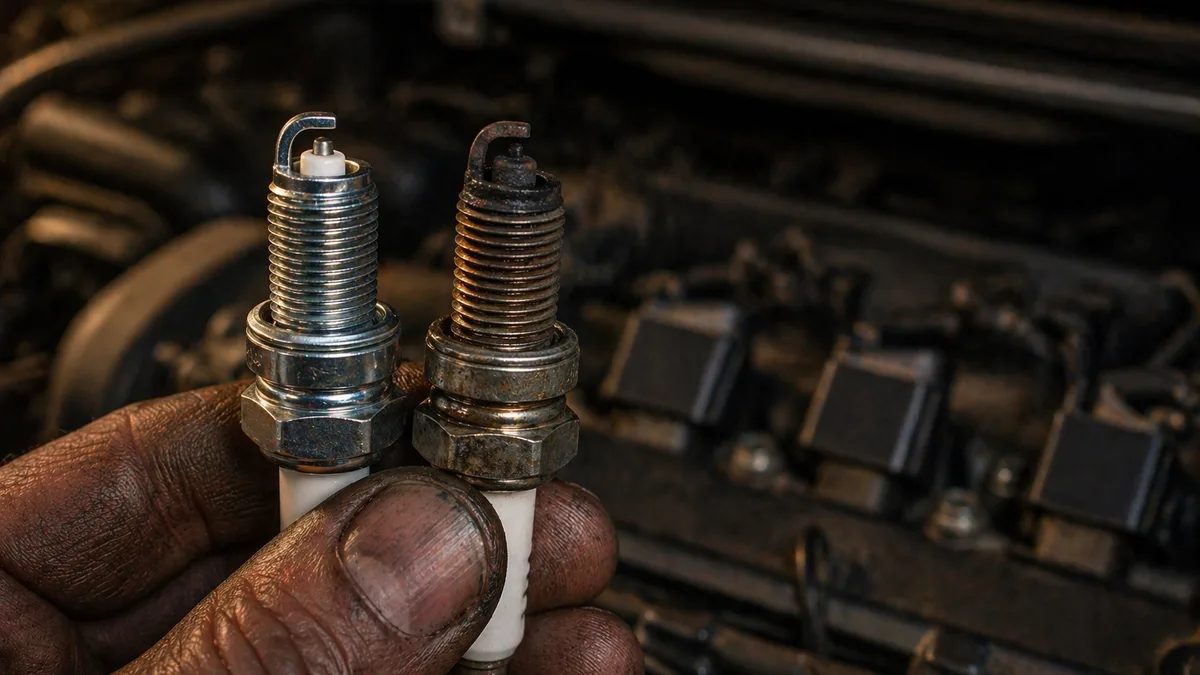
An engine misfire is one of the most common reasons people end up at a shop -- and one of the most commonly ignored. It feels like the engine is shaking at idle, bogging down on acceleration, or just running rougher than it used to. A check engine light comes on. Sometimes it flashes.
Here's what an engine misfire actually is, the most common causes ranked by how often we see them, and the one thing you should never do when your check engine light is flashing.
What a Misfire Actually Is
Your engine has multiple cylinders -- usually 4, 6, or 8. Each cylinder goes through a precise cycle: intake, compression, power (combustion), and exhaust. A misfire happens when one or more cylinders fails to complete the power stroke properly. Either the fuel-air mixture doesn't ignite, doesn't burn fully, or doesn't burn at the right time.
Modern vehicles detect misfires through the crankshaft position sensor, which senses tiny variations in rotational speed. When a cylinder misfires, the crankshaft momentarily slows -- and the engine computer catches it instantly. It then stores a code and turns on the check engine light.
Symptoms of a Misfire
- Rough idle -- the engine shakes, sometimes dramatically, at stops.
- Loss of power on acceleration -- like the engine is bogging down or missing.
- Check engine light on steady, or flashing during the problem.
- Poor fuel economy -- unburned fuel wastes gas.
- Smell of raw fuel from the exhaust.
- Stumble or jerk during acceleration.
- Popping or backfiring sounds.
A misfire often feels like the vehicle has developed a limp. Something is off in a way you can feel through the steering wheel and seat. Related: Why is my car shaking?
Steady CEL vs Flashing CEL — Why It Matters
The single most important thing to understand about engine misfires is the difference between a steady check engine light and a flashing one.
- Steady CEL: A problem exists, but the engine is relatively stable. You can typically drive to a shop in the next few days.
- Flashing CEL: A severe misfire is dumping unburned fuel into the catalytic converter, where it can ignite and overheat the converter. This can melt the internal structure in minutes, turning a $200-$400 sensor or plug replacement into a $2,000-$4,000 converter replacement.
If your CEL is flashing, pull over as soon as it's safe and get the vehicle towed. Don't try to "just make it home." That short drive can destroy a converter that will cost you more than the tow.
Common Causes, Ranked by How Often We See Them
1. Worn or Failed Spark Plugs
Spark plugs wear out. Iridium and platinum plugs typically last 60,000-100,000 miles, copper plugs 30,000-50,000. A worn plug produces a weaker spark that sometimes fails to ignite the mixture. This is the #1 cause of misfires and often the cheapest fix.
2. Failed Ignition Coil
Each spark plug is fired by an ignition coil (or a coil pack). When a coil fails, the cylinder it feeds stops firing reliably. Coils tend to fail after 80,000-120,000 miles, especially in high-heat environments. Diagnostic codes will usually point to the specific cylinder -- P0301 = cylinder 1, P0302 = cylinder 2, and so on.
3. Fuel Injector Problem
If an injector is clogged, stuck, or leaking, the cylinder gets the wrong amount of fuel and misfires. Injectors typically last 80,000+ miles but can fail earlier on bad fuel. Sometimes a fuel system cleaning is enough; sometimes the injector needs replacement.
4. Vacuum Leak
The engine relies on precise air-fuel ratios. A cracked vacuum hose, a leaking intake manifold gasket, or a failing PCV valve introduces unmetered air and leans out the mixture, causing misfires -- usually on multiple cylinders at idle. A smoke test finds these quickly.
5. Compression Issue (Worst Case)
If a cylinder has low compression -- from a burnt valve, worn piston rings, or a head gasket failure -- it can't build enough pressure to ignite properly. This is the most serious misfire cause and often requires significant engine work. A compression test on each cylinder reveals this.
6. Sensor or Wiring Issue
A bad crankshaft or camshaft position sensor, a failed MAF sensor, or a chewed/damaged wire can cause misfire codes. Less common than the top 5, but worth checking before going deeper.
P0300 vs P0301-P0312: What the Codes Mean
When your vehicle throws a misfire code, the last digit tells you the cylinder:
- P0300 -- random/multiple cylinder misfire. Suggests a broader issue like vacuum leak, fuel pressure, or timing.
- P0301 -- cylinder 1 misfire.
- P0302 -- cylinder 2.
- ...and so on through P0312 (cylinder 12 for larger engines).
When we see a single-cylinder code, we usually start by swapping the coil and plug from that cylinder to a different one. If the code follows the swapped part, that's the failed component. If it stays on the same cylinder, something internal -- compression, injector -- is the issue.
What Misfire Repair Costs
Cost depends heavily on what's causing the misfire:
- Spark plug replacement: $100-$300 for most vehicles. More for engines where plugs are hard to reach.
- Ignition coil: $150-$400 per coil installed. Sometimes we recommend replacing all coils on high-mileage vehicles if one has failed.
- Fuel injector: $250-$500 per injector installed.
- Vacuum leak repair: $100-$400 depending on what needs replacing.
- Compression-related repair: Varies widely -- $800 for a valve job, $4,000+ for a head gasket.
Diagnosing the actual cause is the most important step. Throwing parts at a misfire without testing usually wastes money.
Bring It In Before a Flashing Light
A steady CEL with a mild misfire is manageable. A flashing CEL is a race against converter damage. Either way, don't let a misfire sit -- it gets worse, and the downstream damage adds up. If you're feeling roughness, power loss, or seeing a check engine light, call P&C Repair at (860) 601-0271 or stop by 64 N Main St in Thomaston. We'll scan it, test it, and tell you what's actually wrong -- not sell you parts you don't need. We serve drivers throughout Litchfield County and the surrounding towns.
Need Help With This?
If something in this article sounds like what your vehicle is going through, bring it in. We'll diagnose the issue and give you a straight answer.
Keep Reading
More from The Garage
Check Engine Light On? Here's What It Could Mean
Your check engine light can mean anything from a loose gas cap to a serious engine problem. Here's how to tell the difference and what to do next.

Car Shaking While Driving? Here's What's Causing It
If your car is vibrating at highway speed or shaking when you brake, several common problems could be the cause. Here's how to narrow it down and what to fix.
White Smoke from Exhaust: What It Means and When to Worry
White smoke or steam from your tailpipe could be normal condensation or a sign of a serious engine problem. Here's how to tell the difference.
Ready to Get Your Vehicle Fixed?
Schedule your appointment today. Free estimates on all repairs -- we'll explain what needs to be done before we do any work.