REPAIR_GUIDES
How Much Does Transmission Repair Cost? What CT Drivers Should Know
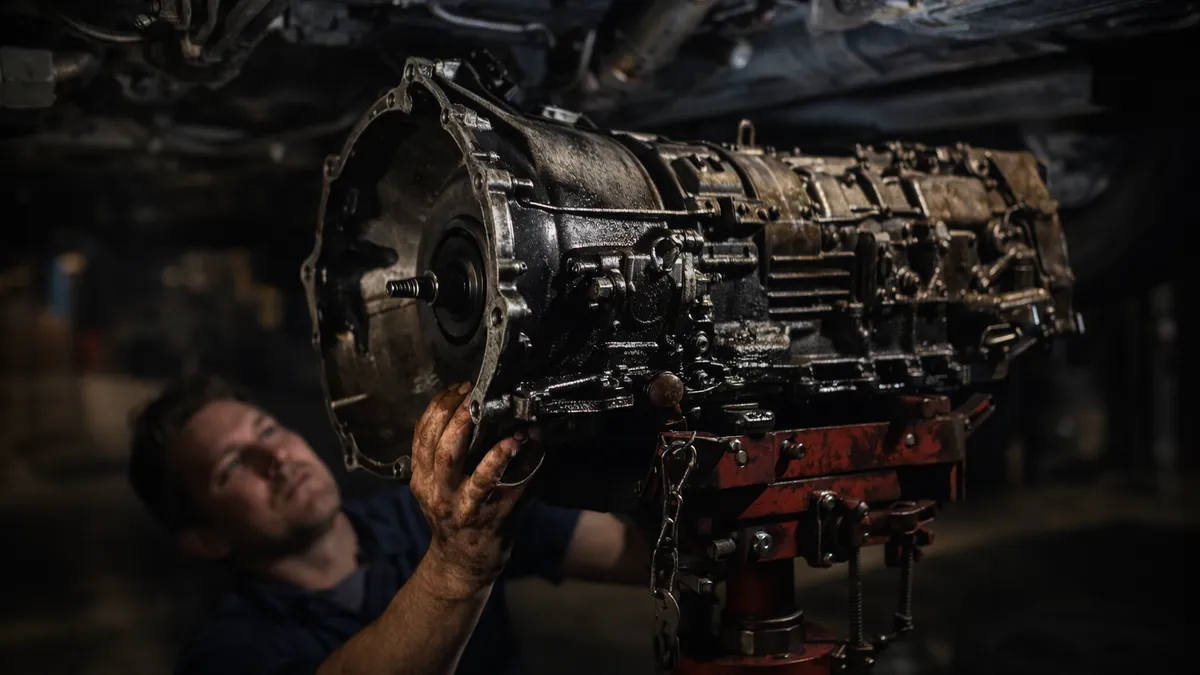
Transmission work ranges from $150-$300 for a fluid change to $2,000-$3,500+ for a rebuild or replacement. That's a wide spread, and the final number depends entirely on what's wrong and what level of repair your transmission needs. A minor service is a routine maintenance item. A full rebuild is one of the most expensive repairs you can face.
At P&C Repair in Thomaston, we work on both automatic and manual transmissions. Here's a straightforward breakdown of what different types of transmission work involve and what they cost in Connecticut.
Types of Transmission Work and Their Costs
Transmission Fluid Change: $150-$300
This is basic maintenance, not a repair. Transmission fluid lubricates, cools, and provides hydraulic pressure for your transmission. Over time, it breaks down and loses its effectiveness. A fluid change involves draining the old fluid and refilling with fresh fluid that meets your manufacturer's specifications.
A more thorough transmission flush -- which exchanges nearly all the fluid rather than just what drains by gravity -- costs slightly more but does a better job of removing degraded fluid and contaminants. Some manufacturers recommend against flushing on certain vehicles, so we follow what's appropriate for your specific transmission.
Cost varies based on fluid type. Many modern vehicles require specific synthetic transmission fluid that costs $15-$25 per quart, and transmissions hold 10-16 quarts. That fluid cost adds up.
Minor Transmission Repair: $500-$1,500
Some transmission problems can be fixed without removing the transmission from the vehicle. These include:
- Solenoid replacement: Shift solenoids are electromechanical valves that control fluid flow inside the transmission. When they fail, you get hard shifts, delayed engagement, or the transmission getting stuck in one gear. Solenoid replacement typically costs $300-$800 depending on accessibility and whether individual solenoids or the entire solenoid pack needs replacing.
- Sensor replacement: Speed sensors, range sensors, and pressure sensors can fail and cause shifting issues. These are usually $200-$500 to replace.
- Seal and gasket leaks: External leaks from the pan gasket, output shaft seal, or axle seals can often be repaired without major disassembly. Expect $200-$600 depending on the location.
- Valve body repair: The valve body directs fluid flow through the transmission. Some valve body issues can be addressed by removing just the valve body rather than the entire transmission. This runs $500-$1,200.
Transmission Rebuild: $2,000-$3,500
A rebuild means removing the transmission, completely disassembling it, inspecting every component, replacing all worn parts (clutches, bands, seals, bearings, bushings), and reassembling it to factory specifications. It's essentially restoring the transmission's internals to like-new condition.
Rebuild costs depend heavily on:
- Vehicle type: A common GM 4L60E automatic is less expensive to rebuild than a BMW ZF 8-speed or a CVT transmission. Parts availability and complexity drive the price.
- Extent of damage: If the torque converter is also damaged, or if hard parts like the planetary gear sets or the case itself are worn, costs increase.
- Front-wheel drive vs. rear-wheel drive: FWD transmissions (transaxles) generally take more labor to remove and reinstall because of the additional components that have to come off.
Transmission Replacement: $2,500-$5,000+
Sometimes a rebuild isn't practical -- the damage is too extensive, the case is cracked, or rebuild parts aren't readily available. In those cases, replacing the transmission with a remanufactured unit is the better option.
A remanufactured transmission has been completely disassembled, inspected, and rebuilt at a factory with all worn components replaced. They typically come with a warranty of 1-3 years. The unit cost ranges from $1,500-$3,500 depending on the transmission, plus $800-$1,500 for removal, installation, and fluids.
Used transmissions from salvage yards are another option at lower cost, but they come with more risk -- you don't know the condition of the internal components, and warranties are typically shorter. We can help you weigh the options based on your specific situation.
Signs Your Transmission Needs Attention
Transmission problems rarely fix themselves. Catching issues early often means the difference between a $400 solenoid replacement and a $3,000 rebuild. Here's what to watch for:
- Delayed engagement. You shift from park to drive or reverse, and there's a noticeable pause before the transmission engages. This often indicates low fluid, worn clutches, or a failing solenoid.
- Slipping between gears. The engine revs up but the vehicle doesn't accelerate proportionally. It feels like the transmission briefly loses its grip before catching again. This is a sign of worn internal clutch packs.
- Hard or jerky shifting. Shifts should be smooth and barely noticeable. If you feel a thud or jolt during shifts, something is wrong -- possibly a solenoid issue, dirty fluid, or internal wear.
- Grinding or whining noises. Unusual noises that change with speed or shifting often point to bearing wear, gear damage, or low fluid levels.
- Transmission fluid leak. Transmission fluid is typically reddish and has a distinct sweet smell. If you see red fluid under your car -- especially near the center or front -- check your fluid level and get it inspected. A transmission that runs low on fluid will damage itself quickly.
- Check engine light with transmission codes. Your vehicle's computer monitors transmission performance. Codes in the P0700-P0799 range are specifically transmission-related. Don't ignore them.
- Burning smell. Overheated transmission fluid smells burnt. If you notice this after driving in hilly terrain around Litchfield County or towing, your fluid may be breaking down.
Connecticut Driving Conditions and Your Transmission
Driving in Connecticut is harder on transmissions than many people realize. Here's why:
Hilly terrain means more work for your transmission. Driving up and down the hills on Route 8, Route 6, or the back roads between Thomaston and Torrington puts your transmission through constant gear changes and heavy loads -- especially if you're driving an automatic. This generates more heat, which is the number one enemy of transmission fluid.
Stop-and-go traffic generates heat. If you commute through Waterbury or Bristol daily, your transmission spends a lot of time in its hardest working conditions -- low-speed, frequent shifting, lots of heat with less airflow for cooling.
Cold starts stress seals and fluid. In Connecticut winters, transmission fluid thickens when cold. Those first few minutes of driving before the fluid warms up are when the most wear occurs. Let your vehicle idle for 30-60 seconds on cold mornings before driving aggressively.
Road salt doesn't just affect the body. Transmission cooler lines, which run between the transmission and the radiator, are steel or aluminum and corrode from road salt exposure. A rusted-through cooler line can dump your transmission fluid in minutes, causing catastrophic damage.
How to Extend Your Transmission's Life
Transmissions are designed to last 150,000-200,000+ miles with proper maintenance. Here's what you can do:
- Change the fluid on schedule. This is the most important thing. Check your owner's manual -- most recommend every 30,000-60,000 miles. If you tow or drive in hilly terrain, use the severe-duty interval.
- Fix leaks promptly. A small leak becomes a big problem when the fluid level drops low enough to cause overheating and slipping.
- Address symptoms early. Strange shifting behavior diagnosed and repaired at $500 beats a full rebuild at $3,000 because you waited six months.
- Use the correct fluid. Not all transmission fluids are the same. Using the wrong spec can cause shifting problems and accelerated wear. We always use the fluid specified by your vehicle's manufacturer.
- Warm up before driving hard. Give the fluid a minute to circulate on cold mornings before heading up hills or onto the highway.
Transmission Work at P&C Repair
If your transmission is showing symptoms, the first step is a proper diagnostic evaluation. We'll scan for transmission codes, check fluid condition and level, road test the vehicle, and determine whether you're looking at a minor repair or something more involved.
We provide a clear estimate before doing any work. We'll explain what we found, what it needs, and what your options are -- including whether repair makes financial sense based on your vehicle's age, mileage, and overall condition. No pressure, just information so you can make the right decision.
P&C Repair is located at 64 N Main St in Thomaston, CT -- serving drivers from Waterbury, Plymouth, Terryville, Bristol, Torrington, and throughout Litchfield County. Call (860) 601-0271 to schedule a transmission evaluation.
Need Help With This?
If something in this article sounds like what your vehicle is going through, bring it in. We'll diagnose the issue and give you a straight answer.
Keep Reading
More from The Garage
Check Engine Light On? Here's What It Could Mean
Your check engine light can mean anything from a loose gas cap to a serious engine problem. Here's how to tell the difference and what to do next.
How Often Should You Change Your Oil? A Guide for CT Drivers
Oil change intervals depend on your vehicle, oil type, and driving conditions. Here's what Connecticut drivers actually need to know -- no upsells, just the facts.

Car Shaking While Driving? Here's What's Causing It
If your car is vibrating at highway speed or shaking when you brake, several common problems could be the cause. Here's how to narrow it down and what to fix.
Ready to Get Your Vehicle Fixed?
Schedule your appointment today. Free estimates on all repairs -- we'll explain what needs to be done before we do any work.