DIAGNOSTICS
Oil Spot on the Driveway? How to Identify the Leak by Color and Location
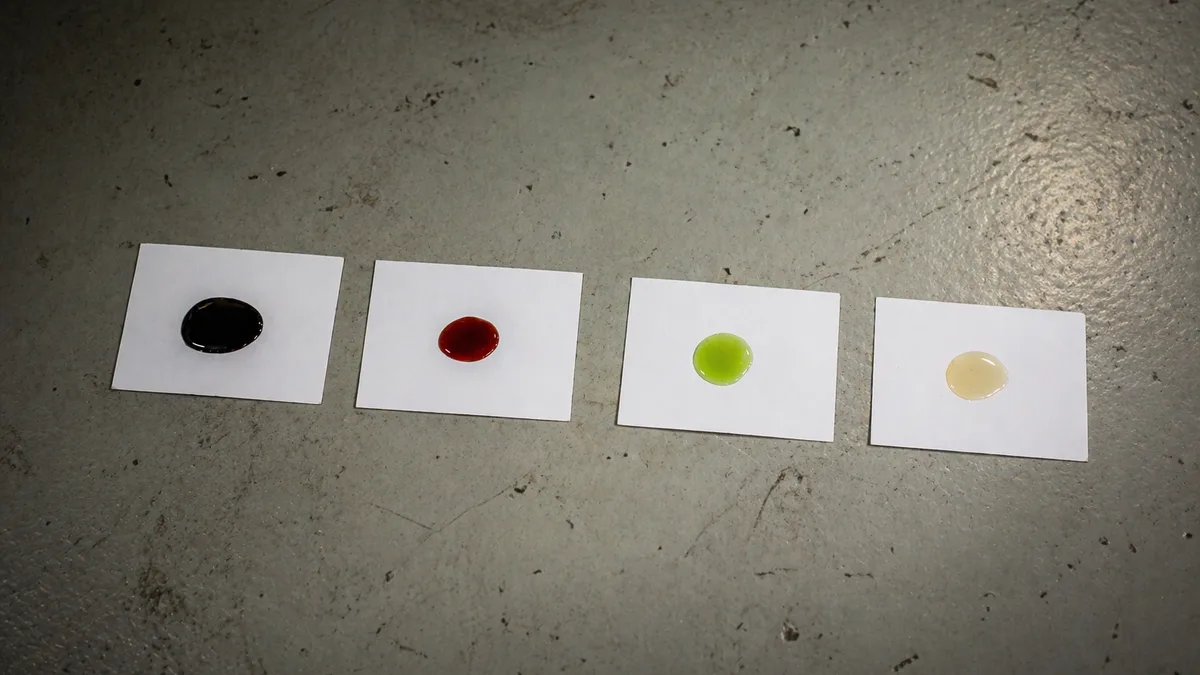
A spot on the driveway or garage floor is one of those things that's easy to ignore -- until it turns into two spots, then a stain, then a puddle. By that point, you've got a clear leak and the question becomes what's leaking, how urgent is it, and how much is it going to cost to fix.
Good news: most leaks can be identified just by the color, smell, and location of the spot. Here's a guide to figuring out what's on your driveway -- and how to tell whether it's an easy fix or a serious problem.
Step 1: Identify the Color
Slide a piece of white cardboard or a paper plate under the vehicle overnight and let a fresh drip collect. That gives you a clean sample to check the color against.
Amber / Light Brown (Engine Oil -- New)
Fresh engine oil is a golden amber color. If the fluid is amber and slightly transparent, it's probably new engine oil -- meaning you either just had an oil change and a seal is weeping, or an overfill is pushing past the gaskets.
Dark Brown or Black (Engine Oil -- Used)
Used engine oil is dark brown or black, has a distinct oil smell, and feels slick between your fingers. It's the most common leak we see. Sources include:
- Oil pan gasket
- Valve cover gasket
- Rear main seal
- Oil filter housing or gasket
- Drain plug (over-tightened or washer failing)
A slow engine oil drip usually isn't an emergency, but a steady drip needs attention. Major oil loss can starve the engine of lubrication.
Red or Reddish-Brown (Transmission or Power Steering Fluid)
Transmission fluid is red when fresh and darkens to reddish-brown as it ages. Power steering fluid is similar -- sometimes closer to amber. You can often tell them apart by smell:
- Transmission fluid smells slightly sweet to petroleum-like. A burnt smell means the transmission is overheating.
- Power steering fluid smells like burnt oil and is thinner.
Transmission leaks are worth addressing quickly -- low fluid can damage the transmission. See our transmission repair cost guide.
Green, Orange, Pink, or Yellow (Coolant)
Coolant comes in multiple colors depending on the formulation:
- Green -- traditional IAT coolant (older vehicles)
- Orange, red, or pink -- Dex-Cool or HOAT (modern GM, some others)
- Yellow -- HOAT (some Ford, Chrysler)
- Blue -- Asian-manufacturer specific
Coolant has a sweet smell and feels slightly slick. Common leak points are the radiator, hoses, water pump, heater core, and intake manifold gasket. Low coolant leads to overheating, which can cause serious engine damage.
Clear, Light Yellow, or Brown (Brake Fluid)
Brake fluid is clear or slightly yellow when new and turns brown as it ages. It's less viscous than oil and has a chemical smell. Brake fluid leaks are always urgent -- losing fluid means losing brake function. Common leak points are the master cylinder, brake lines (a big issue in Connecticut due to road salt corrosion), wheel cylinders, and calipers.
If you see any fluid that might be brake fluid, don't drive the vehicle until it's checked.
Dark, Thick, Foul-Smelling (Gear Oil / Differential Fluid)
Differential and manual transmission gear oil is dark brown or black and has a very strong sulfur-like smell. You'll usually find it at the rear of the vehicle (for RWD or AWD) or at the front or rear differential.
Clear, Odorless (Water or Air Conditioner Condensation)
If the fluid is clear, odorless, and evaporates quickly -- especially in summer after using the AC -- it's almost certainly condensation dripping from the evaporator drain. This is normal and not a leak.
Step 2: Identify the Location
Where the spot is under the vehicle narrows down the source:
- Front-center, directly under the engine -- oil pan, valve cover, front main seal, water pump.
- Front driver-side (on FWD vehicles) -- transaxle, CV axle seal, power steering.
- Front passenger-side -- often oil filter area, A/C drain.
- Middle of the vehicle -- transmission tail seal, transfer case, exhaust condensation.
- Rear of vehicle -- differential, fuel tank area, rear brake components.
- Behind a wheel -- brake fluid (caliper or wheel cylinder), axle seal, bearing grease.
Combine the color clue with the location clue and you usually get a clear picture of what's leaking and where.
Which Leaks Are Urgent
Treat as urgent (don't drive until checked):
- Brake fluid (any amount)
- Fuel leaks
- Major coolant loss (steam, temperature gauge climbing)
- Heavy oil loss that drops the dipstick level
Treat as "bring it in soon":
- Slow engine oil drip
- Transmission fluid drip
- Slow coolant seepage
- Power steering fluid drip
- Differential fluid drip
Treat as normal:
- Clear water dripping after AC use
- Exhaust condensation on cold mornings
How We Diagnose Leaks
At P&C Repair we use a few techniques depending on the leak:
- Clean and observe -- degrease the area, then drive the vehicle to see where fresh leakage appears.
- UV dye -- add a fluorescent dye to the suspect system, run the vehicle, then use a UV light to trace exactly where it's coming out.
- Pressure test -- cooling systems can be pressurized to reveal slow leaks; brake systems can be bled and checked.
- Visual inspection on the lift -- sometimes you just need the vehicle high enough to see clearly.
Finding the actual source matters. Oil can travel from a leak at the valve cover down to the oil pan area before dripping -- the location on the driveway doesn't always match the source component. That's why proper diagnosis is worth the time.
Bring Us the Cardboard
If you've got a spot on the driveway you can't identify, slide a piece of cardboard under overnight, bring it in along with the car, and we'll figure it out. Call P&C Repair at (860) 601-0271 or stop by 64 N Main St in Thomaston. We serve drivers from Waterbury, Plymouth, Terryville, Bristol, Torrington, Harwinton, Watertown, Wolcott, Naugatuck, and throughout Litchfield County. Free estimates on all repairs -- we'll tell you exactly what's leaking and what it'll take to fix.
Need Help With This?
If something in this article sounds like what your vehicle is going through, bring it in. We'll diagnose the issue and give you a straight answer.
Keep Reading
More from The Garage
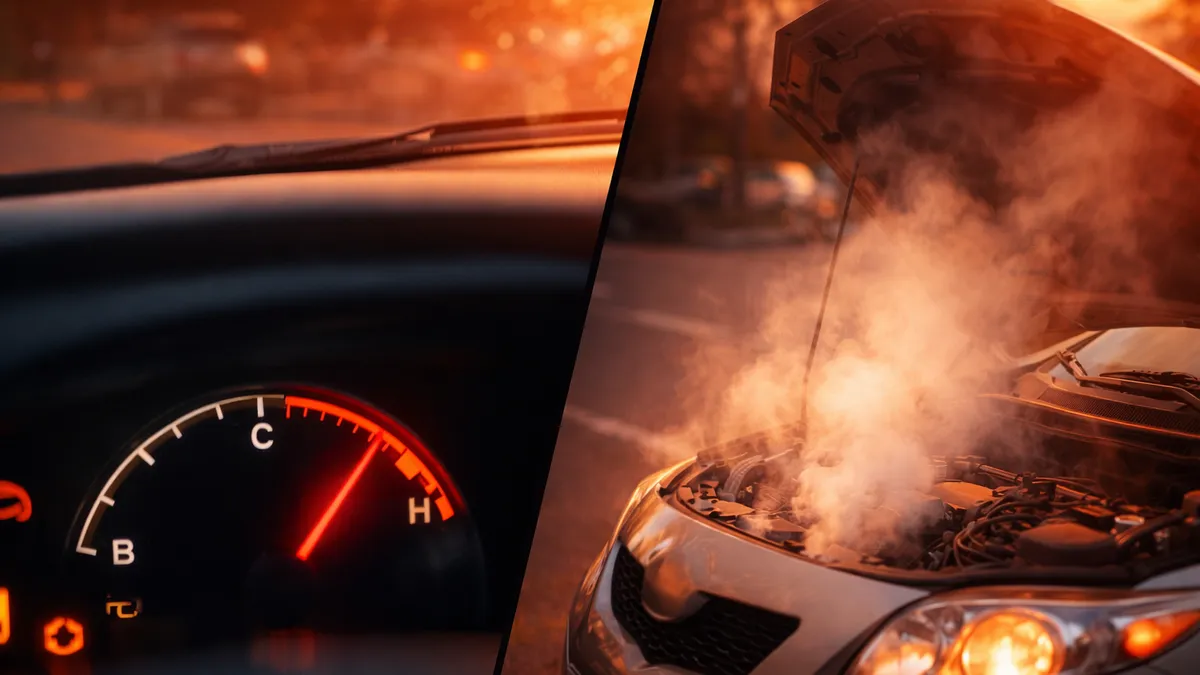
Car Overheating but Coolant Is Full? Here's What to Check
If your engine is overheating even though the coolant reservoir looks full, several hidden problems could be the cause. Here's what to look for before serious damage occurs.
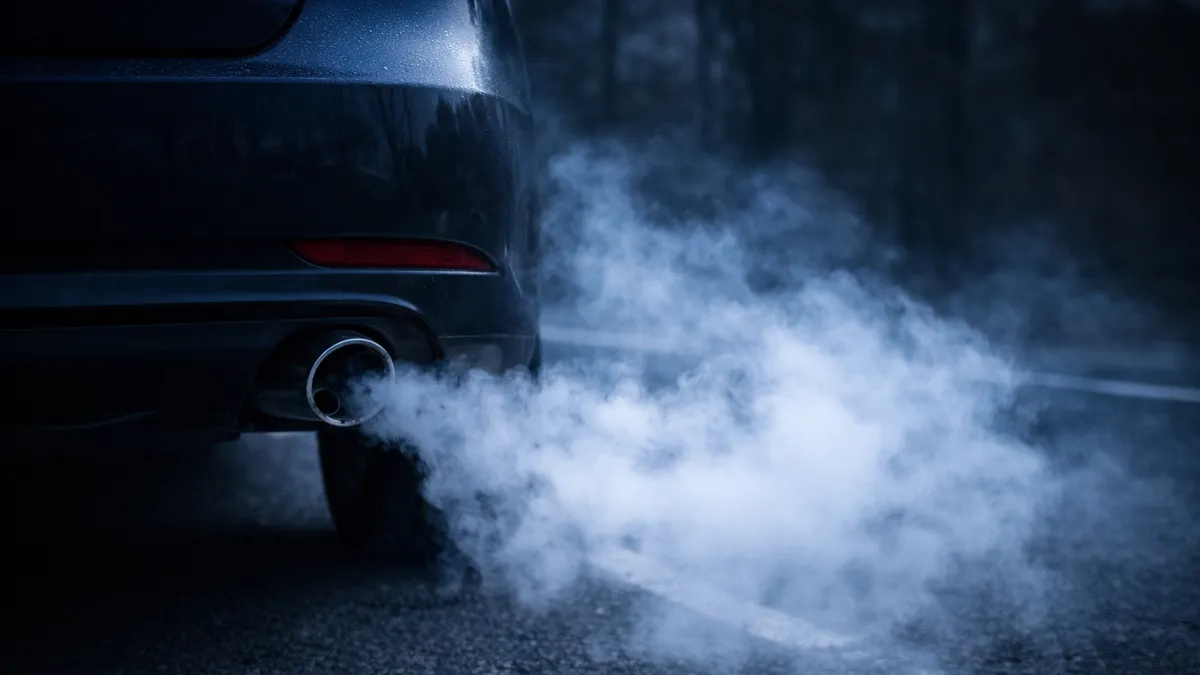
White Smoke from Exhaust: What It Means and When to Worry
White smoke or steam from your tailpipe could be normal condensation or a sign of a serious engine problem. Here's how to tell the difference.
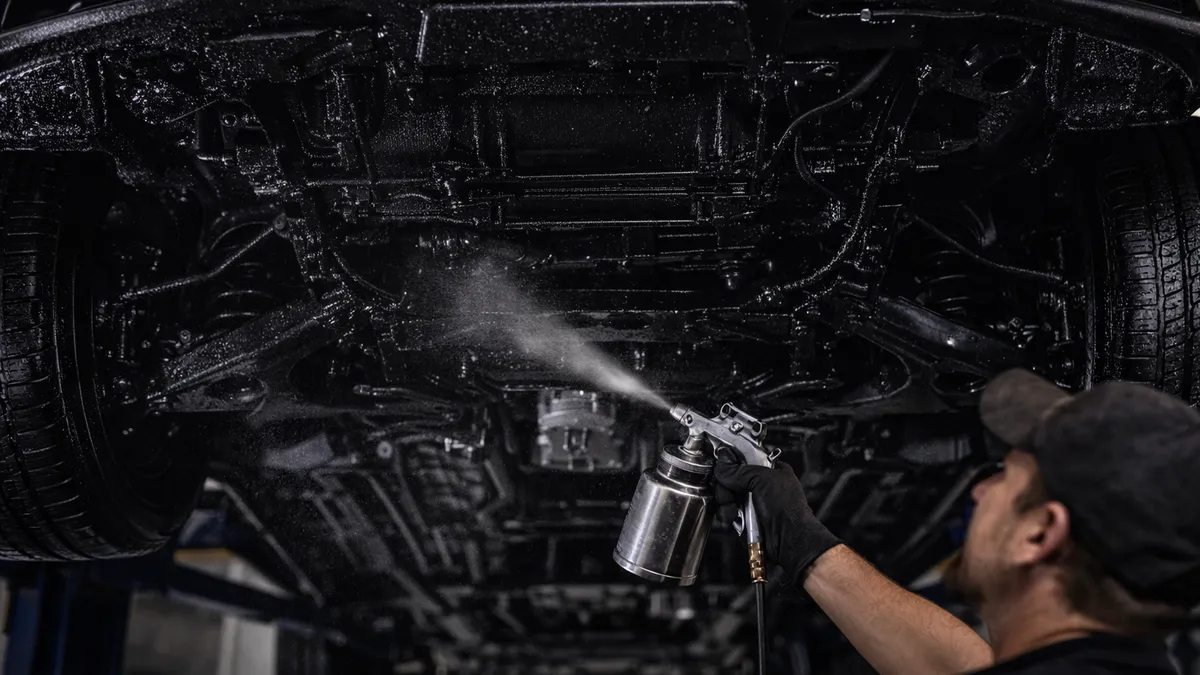
Undercoating and Rust Protection in Connecticut — Why It Matters
Road salt destroys vehicles from the bottom up in Connecticut. Here's why undercoating matters, when to get it done, and how it protects your exhaust, brake lines, and frame.
Ready to Get Your Vehicle Fixed?
Schedule your appointment today. Free estimates on all repairs -- we'll explain what needs to be done before we do any work.