MAINTENANCE_TIPS
Synthetic vs Conventional Oil — Which Is Right for Your Car?
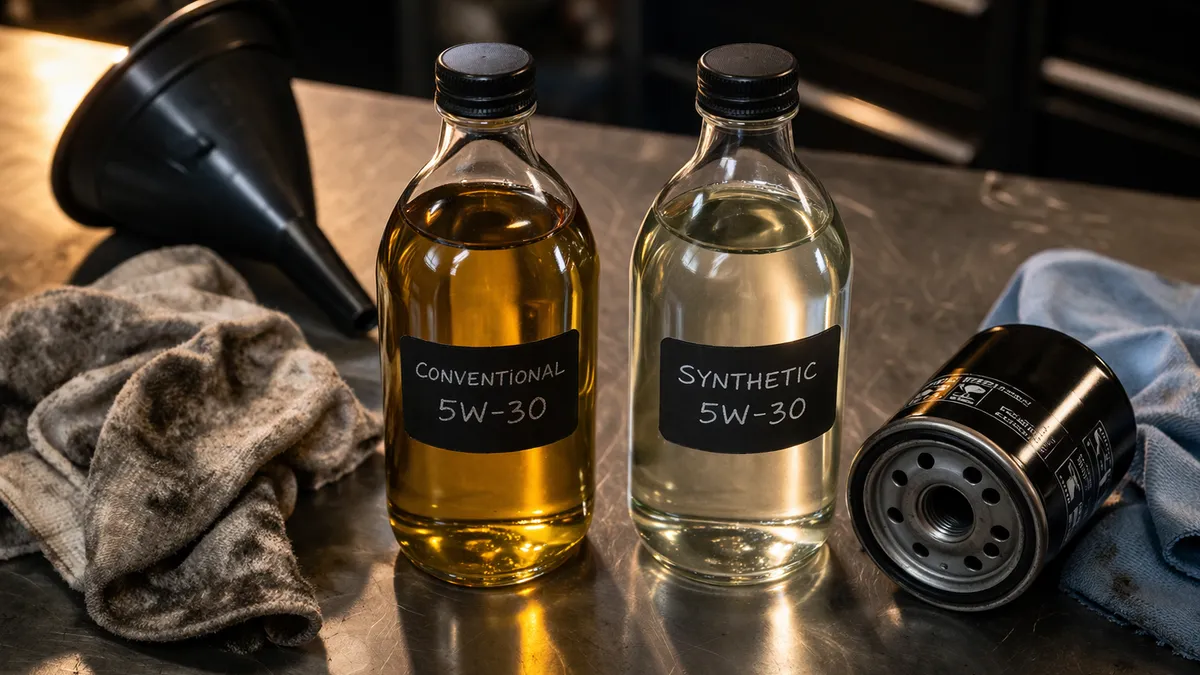
Walk into any quick-lube chain and there's a good chance the technician will recommend full synthetic oil -- even if your car doesn't need it. Synthetic is a bigger sale, simple as that. Sometimes it's the right call. Sometimes you're paying extra for something your engine won't benefit from. Here's the real breakdown so you can make an informed decision instead of just going along with the upsell.
What's the Actual Difference?
Conventional oil is refined from crude oil pumped out of the ground. It goes through a refining process that removes impurities, but the molecules vary in size and shape. It works fine as a lubricant, but it breaks down faster under heat and stress, and it thickens more in cold weather.
Full synthetic oil is engineered in a lab. The base molecules are uniform in size and shape, which means the oil flows more consistently, resists breakdown at high temperatures, and performs better in extreme cold. It also contains a more advanced additive package for cleaning, protecting, and extending oil life.
Synthetic blend is exactly what it sounds like -- a mix of conventional and synthetic base oils. It offers some of the benefits of full synthetic at a lower price point. It's a solid middle ground for many vehicles.
High-mileage oil is either a synthetic or synthetic blend formulated with seal conditioners and additives designed for engines with over 75,000 miles. The seal conditioners help rejuvenate aging gaskets and seals that may be starting to dry out and seep oil. If your engine has minor oil consumption or seepage, high-mileage oil can help slow it down.
When You Need Full Synthetic
There are situations where full synthetic isn't just a nice-to-have -- it's required or strongly recommended:
- Your owner's manual specifies it. This is the biggest one. If the manufacturer says full synthetic, use full synthetic. Period. Using conventional in an engine designed for synthetic can void warranty coverage and accelerate wear.
- Turbocharged or supercharged engines. Forced induction creates significantly more heat than naturally aspirated engines. Synthetic handles that heat without breaking down as quickly.
- European vehicles. Most European manufacturers -- BMW, Mercedes-Benz, Volkswagen, Audi, Volvo -- require full synthetic oil that meets their specific specifications (like VW 502/505 or BMW LL-01). Using the wrong oil in these vehicles can cause real problems.
- Newer direct-injection engines. Direct injection runs hotter than port injection. The fuel doesn't wash over the intake valves to keep them clean, so the oil has to work harder. Synthetic provides better protection in these conditions.
- Towing or heavy loads. If you regularly tow a boat, trailer, or haul heavy equipment, your engine is under more stress. Synthetic holds up better under sustained heavy loads.
- Extreme temperature driving. If you're dealing with sub-zero cold starts in winter or sustained high-heat driving in summer -- both of which happen in Connecticut -- synthetic provides better protection at both ends of the thermometer.
When Conventional Is Fine
Conventional oil gets a bad reputation it doesn't entirely deserve. It's still a perfectly good lubricant when used correctly:
- Older engines designed for it. If you're driving a 2005 Chevy Silverado with a 5.3L V8 that's always run conventional, there's no compelling reason to switch to synthetic unless you want longer intervals between changes.
- Low-mileage or short-trip vehicles. If you only put 5,000-8,000 miles per year on your car and change your oil on schedule, conventional does the job.
- Budget considerations. If money is tight, a conventional oil change done on time is far better than a synthetic oil change done late. Consistent, on-schedule maintenance matters more than oil type in most cases.
The key with conventional oil is sticking to shorter change intervals -- every 3,000 to 5,000 miles. If you're disciplined about that, conventional will protect your engine just fine in most applications.
Cost Comparison
Here's what you can expect to pay for an oil change at a reputable shop (not the $19.99 loss-leader specials that come with a side of upsells):
- Conventional oil change: $30-$50
- Synthetic blend oil change: $40-$70
- Full synthetic oil change: $60-$90
- High-mileage oil change: $50-$80
Here's where the math gets interesting. Conventional oil needs changing every 3,000-5,000 miles. Full synthetic lasts 5,000-7,500 miles (sometimes longer with oil monitoring systems). If you drive 12,000 miles per year, that's roughly 3 conventional changes versus 2 synthetic changes annually. The yearly cost difference shrinks significantly -- and in some cases synthetic actually costs less per year when you factor in fewer shop visits.
The Connecticut Factor
Connecticut's climate is a real consideration when choosing oil. We get genuine four-season weather -- hot, humid summers with temperatures pushing into the 90s and cold winters that regularly drop into the single digits or below zero.
Cold starts are where synthetic really earns its money. When your car sits overnight in a Thomaston driveway in January and the temperature is 5 degrees, conventional oil thickens into something closer to molasses. It takes longer to circulate through the engine when you start it up, and during those first 30-60 seconds, critical engine components are running with less lubrication than they need. Synthetic oil flows significantly faster at low temperatures, reducing that vulnerable cold-start window.
Connecticut driving conditions also qualify as "severe" by most manufacturer definitions. Stop-and-go traffic on Route 8 and I-84, short trips around town that don't fully warm up the engine, temperature extremes throughout the year -- all of that accelerates oil breakdown. If you're using conventional oil in these conditions, you should be on the shorter end of the change interval (3,000 miles rather than 5,000).
Can You Switch Between Types?
Yes, and this is one of the most common questions we get. Here's the truth:
- You can switch from conventional to synthetic at any time. There's an old myth that synthetic oil will cause leaks in older engines by "shrinking seals." This was arguably a concern decades ago with early synthetic formulations, but modern synthetic oils are fully compatible with engine seals. If your engine develops a leak after switching to synthetic, the seals were already on their way out -- the synthetic didn't cause it.
- You can switch from synthetic to conventional. Your engine won't explode. But you'll need to go back to shorter change intervals (3,000-5,000 miles) since conventional breaks down faster.
- Mixing is fine. If you need to top off between changes and all you have is conventional to add to synthetic (or vice versa), it won't damage anything. The oils are compatible. You're just diluting the synthetic's advantages slightly.
What P&C Repair Recommends
Our approach is simple: we follow your owner's manual. We stock conventional, synthetic blend, full synthetic, and high-mileage oils. When you come in for an oil change, we look up what your manufacturer recommends and use that. We don't push full synthetic on a 2008 Toyota Camry that's perfectly happy with conventional, and we don't cut corners with conventional on a turbocharged VW that needs synthetic.
If you're unsure what your vehicle needs, we'll look it up for you -- no charge, no pressure. We'd rather you get the right oil at the right interval than overpay for something your engine doesn't need.
The bottom line: the best oil for your car is the one your manufacturer recommends, changed on the schedule your driving conditions require. Everything else is marketing.
Stop by P&C Repair at 64 N Main St in Thomaston, or call us at (860) 601-0271. We'll make sure your engine gets exactly what it needs -- nothing more, nothing less.
Need Help With This?
If something in this article sounds like what your vehicle is going through, bring it in. We'll diagnose the issue and give you a straight answer.
Keep Reading
More from The Garage
How Often Should You Change Your Oil? A Guide for CT Drivers
Oil change intervals depend on your vehicle, oil type, and driving conditions. Here's what Connecticut drivers actually need to know -- no upsells, just the facts.

Winter Car Maintenance Checklist for Connecticut Drivers
Connecticut winters are tough on cars. Here's what to check before the cold hits — from tires and batteries to oil and coolant. A seasonal checklist from a Thomaston mechanic.
Ready to Get Your Vehicle Fixed?
Schedule your appointment today. Free estimates on all repairs -- we'll explain what needs to be done before we do any work.